




Jinshari Vol. 54
-
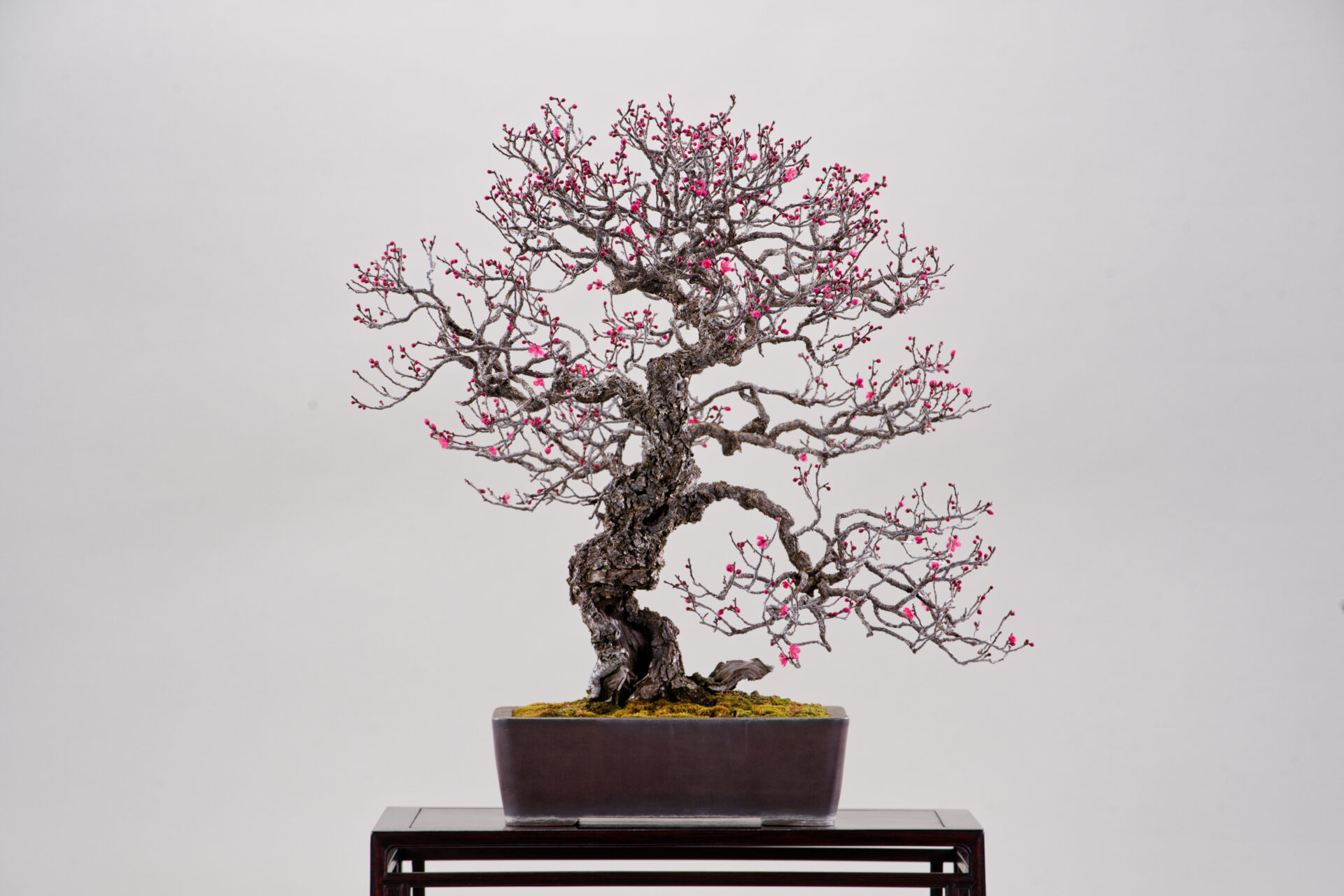
Cover page: Hibai (Japanese apricot) (A-081)
This Japanese apricot’s trunk violently twists as it rises, reaching its branches out to the left and right as if it is dancing. It gives off the impression of a stern tree, having lived a long life, through its shari (white deadwood), that can be seen through the rough bark near the base of the trunk.
Behind the Scenes of the Exhibit
64th Kokufu Bonsai Award Winner: Japanese Black Pine named Zuikō
The Kokufu Bonsai Exhibition, the pinnacle of bonsai exhibitions, will be holding its 100th exhibition in 2026. It first started in 1934, and after its suspension during WWII, the exhibition is now held every February at the Tokyo Metropolitan Art Museum. Famous pieces representing the world of bonsai will surely be gathered at this exhibition once again.
Many pieces from our collection here at the Omiya Bonsai Art Museum have also been displayed at the Kokufu Bonsai Exhibition. Here, we will introduce ones of those: a Japanese black pine named Zuikō (A-010).
Zuikō is said to be the oldest living root-over-rock Japanese black pine bonsai. After being displayed on the cover of the October 1935 issue of Bushoan’s Beloved Bonsai Catalog, it was passed down from one famous artisan to another. The year after it was first displayed at the 1956 Kokufu Bonsai Exhibition, Kyuzo Murata, the founder of Kyuka-en in Omiya Bonsai Village, took over its care after receiving it from Saichi Suzuki of Daiju-en in Okazaki, Aichi Prefecture.
After that, it was cultivated under a disciple of Kyuzo Murata, Kyoji Matsuda of Shogetsu-en in Yamakita Town, Kanagawa Prefecture. It garnered attention at the 45th Kokufu Bonsai Exhibition and the Nippon Bonsai Sakufuten, both in 1971. At the 64th Kokufu Bonsai Exhibition in 1990, it was the first rock planting bonsai to win the highest award (Kokufu-sho). It was at the time of this exhibit that it was named Zuikō by Kyuzo Murata.
Its appearance has changed little by little over time, but its beauty has been preserved while being passed down through many people. Zuikō is currently on display at the museum, so please come view this magnificent bonsai that has become one with its rock.

Sales catalog 1941
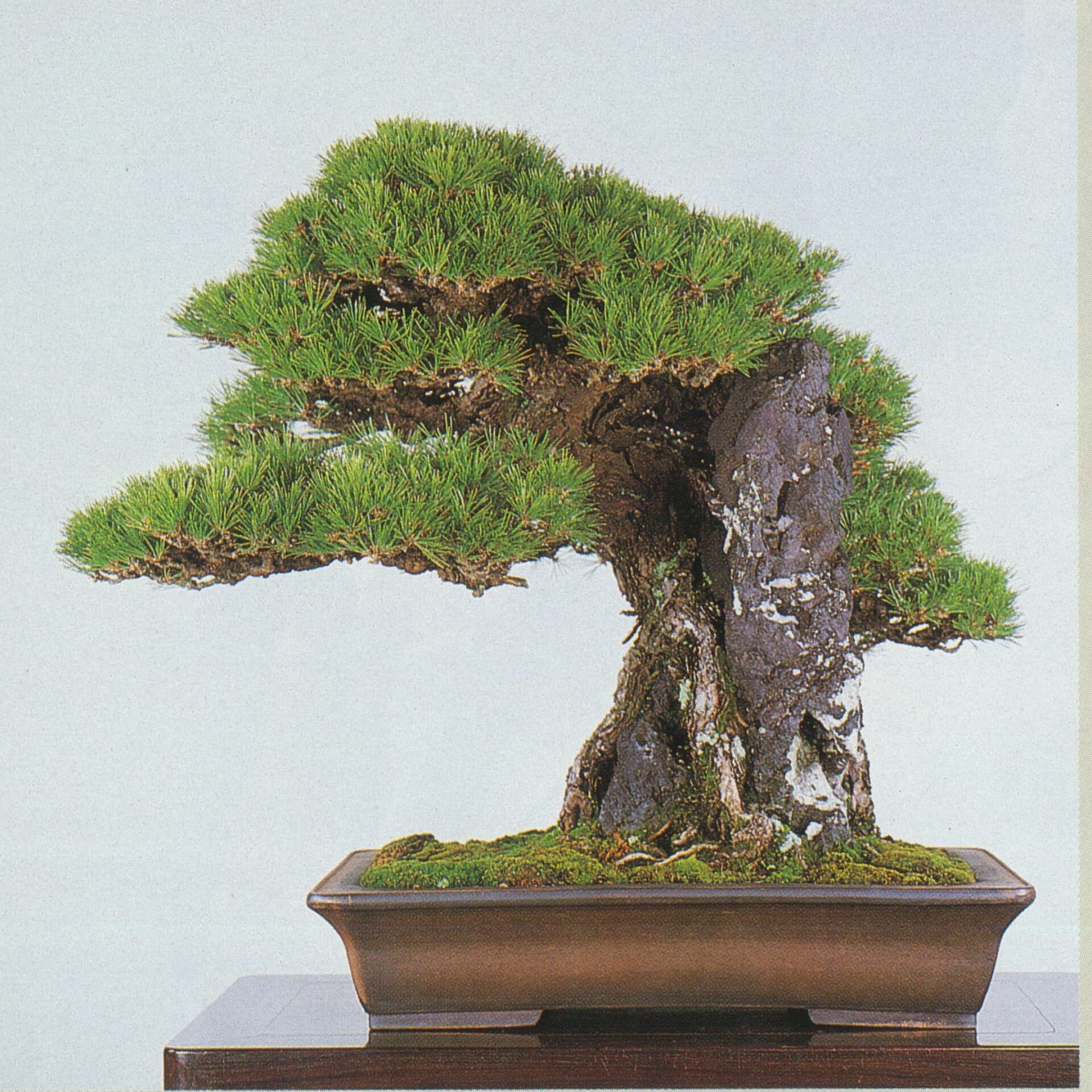
At the time of winning the Kokufu-sho Award 1990

2024
An Artisan's Work
Emergency Repotting of Japanese Black Pine Bonsai named Shishi-no-mai
This large black pine bonsai named Shishi-no-mai (lit. lion’s dance) (A-065) was named through crowdsourcing ideas online and is loved by many museum visitors. Its magnificent presence is over one meter tall and catches many visitors’ eyes in the bonsai garden.
However, in spring of 2024, a crack was found in its pot from the pressure of the growing roots. The damage was progressing daily, so emergency measures had to be taken while a replacement pot was found. Thanks to the cooperation of Mansei-en in the Bonsai Village, a pot was found that could handle the repotting.
The repotting took place when the museum was closed. It took both of the museum’s bonsai technicians and two bonsai artisans from the Omiya Bonsai Association to work together to complete the task. Because of the potential danger of moving the broken pot for the repotting, the work was done on the outdoor stand where it was being displayed.
The first thing that had to be done was to lift the tree out of its pot. The roots were fused to the sides of the pot, so the tree had to be lightened as much as possible by breaking down and removing the soil from around its roots. A sling was fed through its roots and then pipes were put in the sling to carefully lift the tree up. It looked just like how omikoshi (portable Shinto shrines) are carried during festivals. Even with all four people lifting together, they were not able to get it up on the first try!
Next, the shards of the damaged pot were removed, and the new pot was prepared. The new pot weighs around 30 kilograms, so it took everyone’s coordination to be able to get it ready quickly. This part had to be done while two people stood on trolleys and the other two held the trolleys secure.
A soil mixture of akadama and lava rock was used in the repotting. This helps maintain a good balance of water drainage and breathability.
Lastly, the placement of the tree inside the pot had to be checked. Normally, trees are held in place with wiring, but because this piece was very heavy and stable, there was no need to secure it with wiring. The operation was finished after five bags of soil were added and the bonsai was given plenty of water.
Through the four masters’ skill, planning, and beautiful coordination, Shishi-no-mai is able to once again grow healthy and strong in its new pot. Please check it out when you visit the museum!
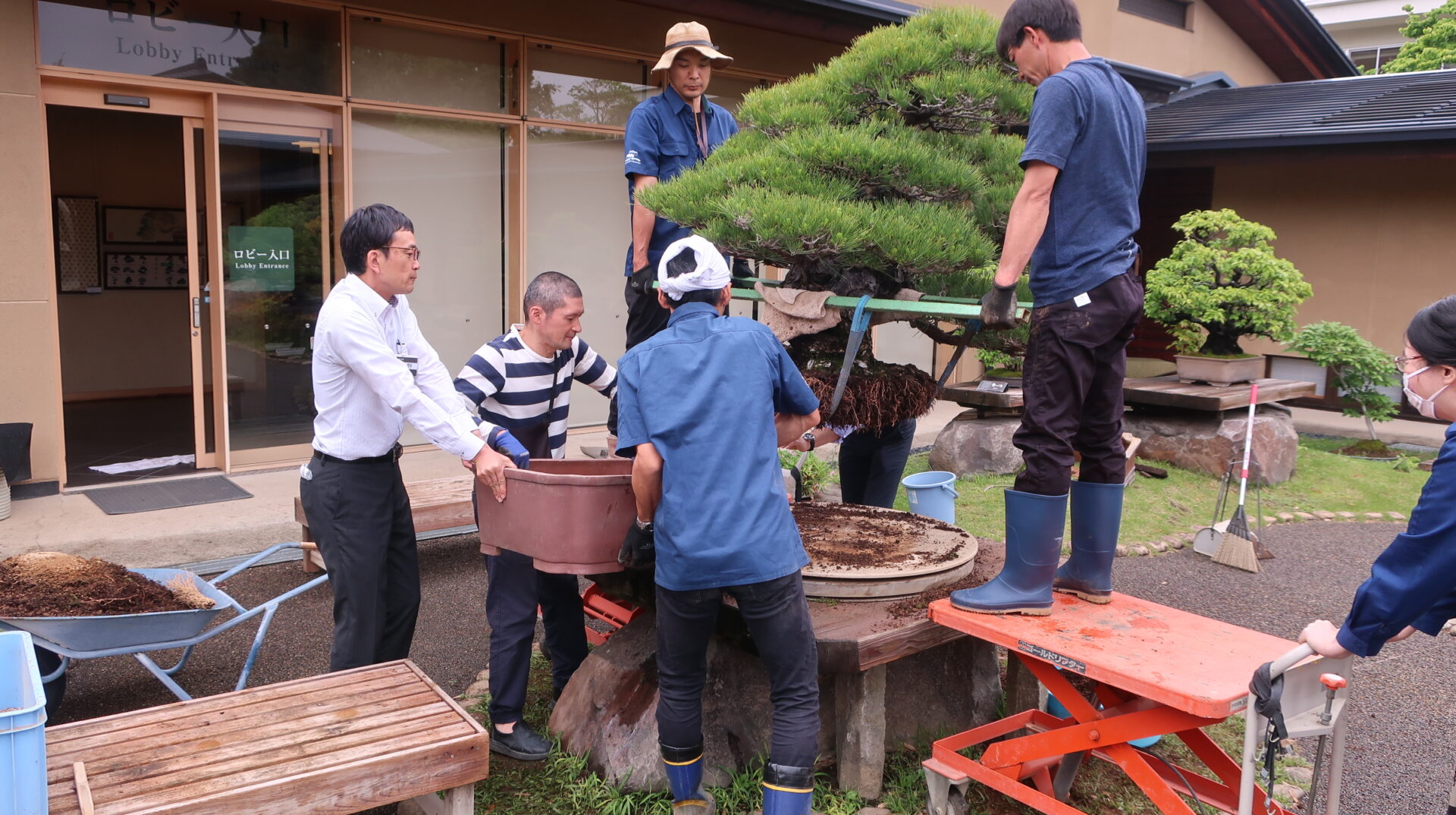
Placing it in the new pot

Making sure there are no gaps in the soil
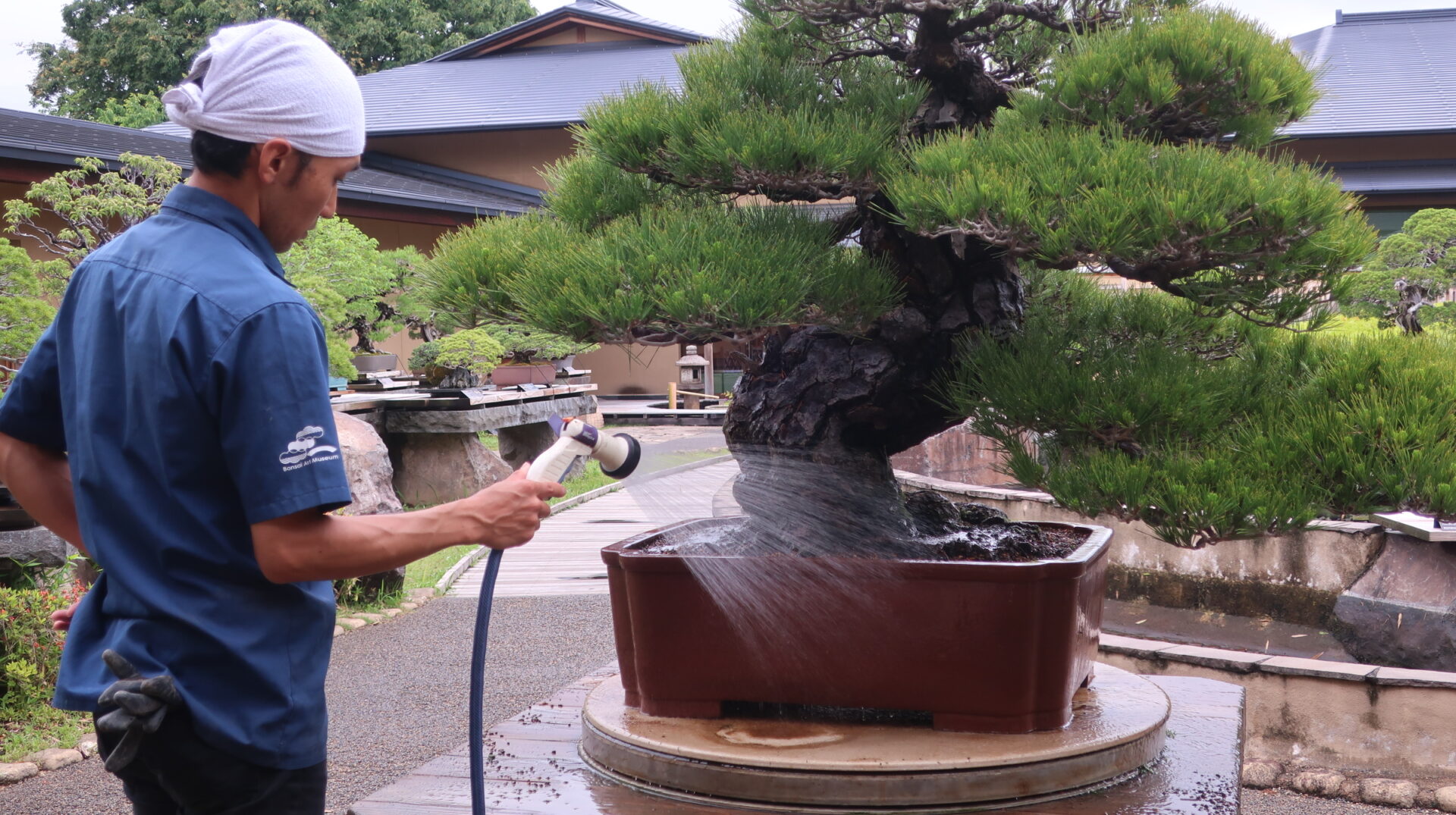
The work is finished after giving it plenty of water!!
Supporter Newsletter
Higurashi (Japanese White Pine) Special Exhibition: ‘Welcome Museum’ Activities
The “Museum Supporters” volunteer group was formed at the Omiya Bonsai Art Museum to help with the museum’s different operations and activities. For this issue’s Supporter Newsletter, we will share some details from Welcome Museum activities held from November 1-3.
Us volunteers hold tours every Saturday, Sunday, and Monday geared towards general guests visiting the museum. These tours are called Welcome Museum. From November 1-3 of this year, a treasure of the bonsai world, Higurashi (Japanese white pine), had a special exhibition period from October 30-November 5.
It was named Higurashi (lit. all day) because it is said that you can look at it all day and never grow tired of it. It is known for being a masterpiece of twin-trunk bonsai; a larger and smaller trunk curve around as if embracing a space that is created in the middle. It is truly magnificent and beautiful.
Higurashi is only displayed for a limited time once a year during a special viewing exhibit. This year, we once again welcomed many guests who came to see him. Many people praised him saying things like, “I am so happy I got to see Higurashi!” I think Higurashi was also very happy. I was reminded of Higurashi’s charm and had a wonderful time sharing details about him with many guests.
At the conclusion of these tours, museum guests told me things like “I want to come again in a different season,” and “I want to go check out the bonsai gardens as well now.” These kind words helped give me motivation to keep volunteering. Thank you!
I am always hoping that more people will come to love bonsai. Now that the Bonsai Village has welcomed its 100th year, I want to continue working hard so that many more people can come enjoy their time here.
Museum Supporter Kimie Tanaka
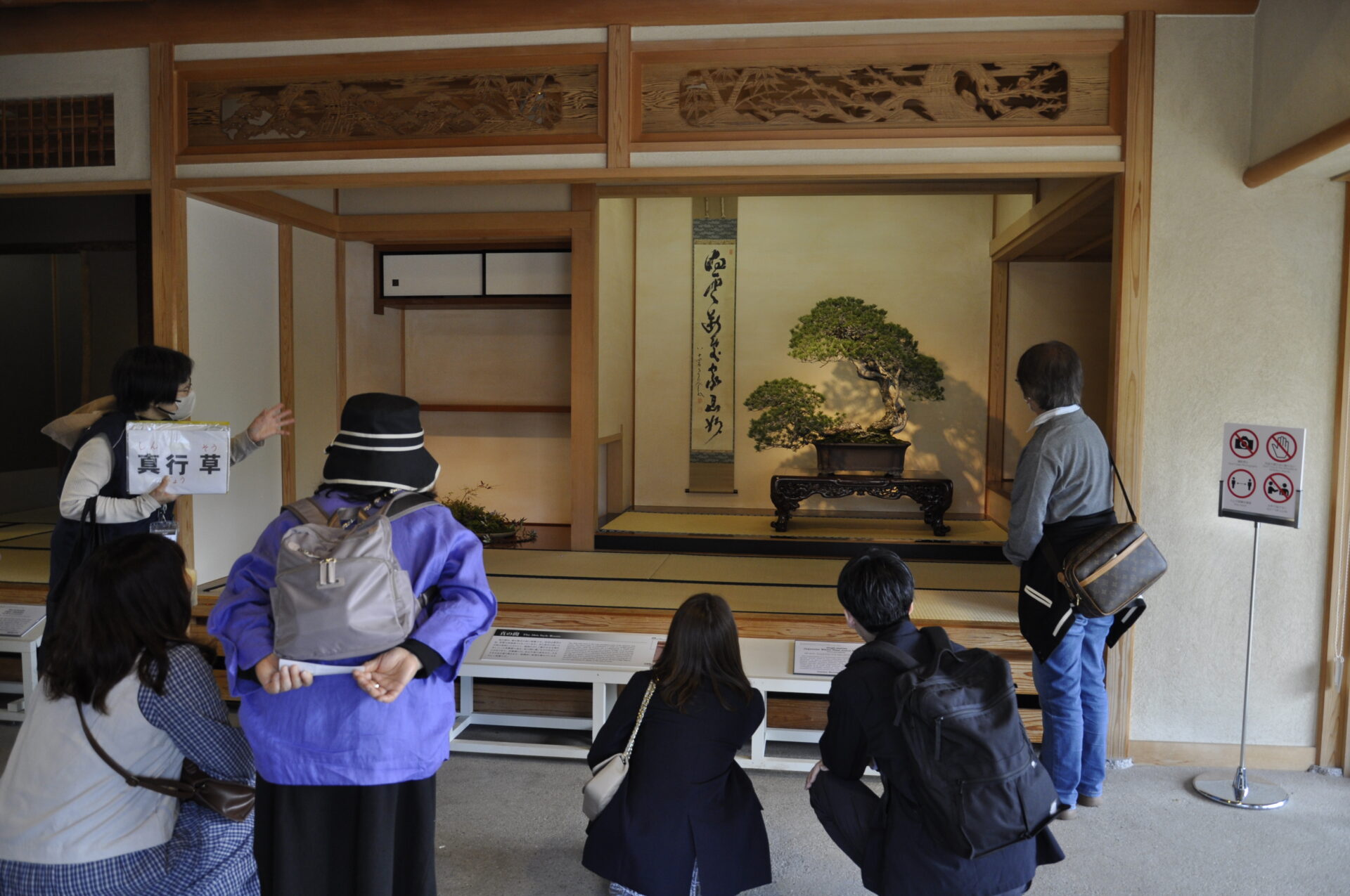
Being impressed by Higurashi’s charm!
Back number
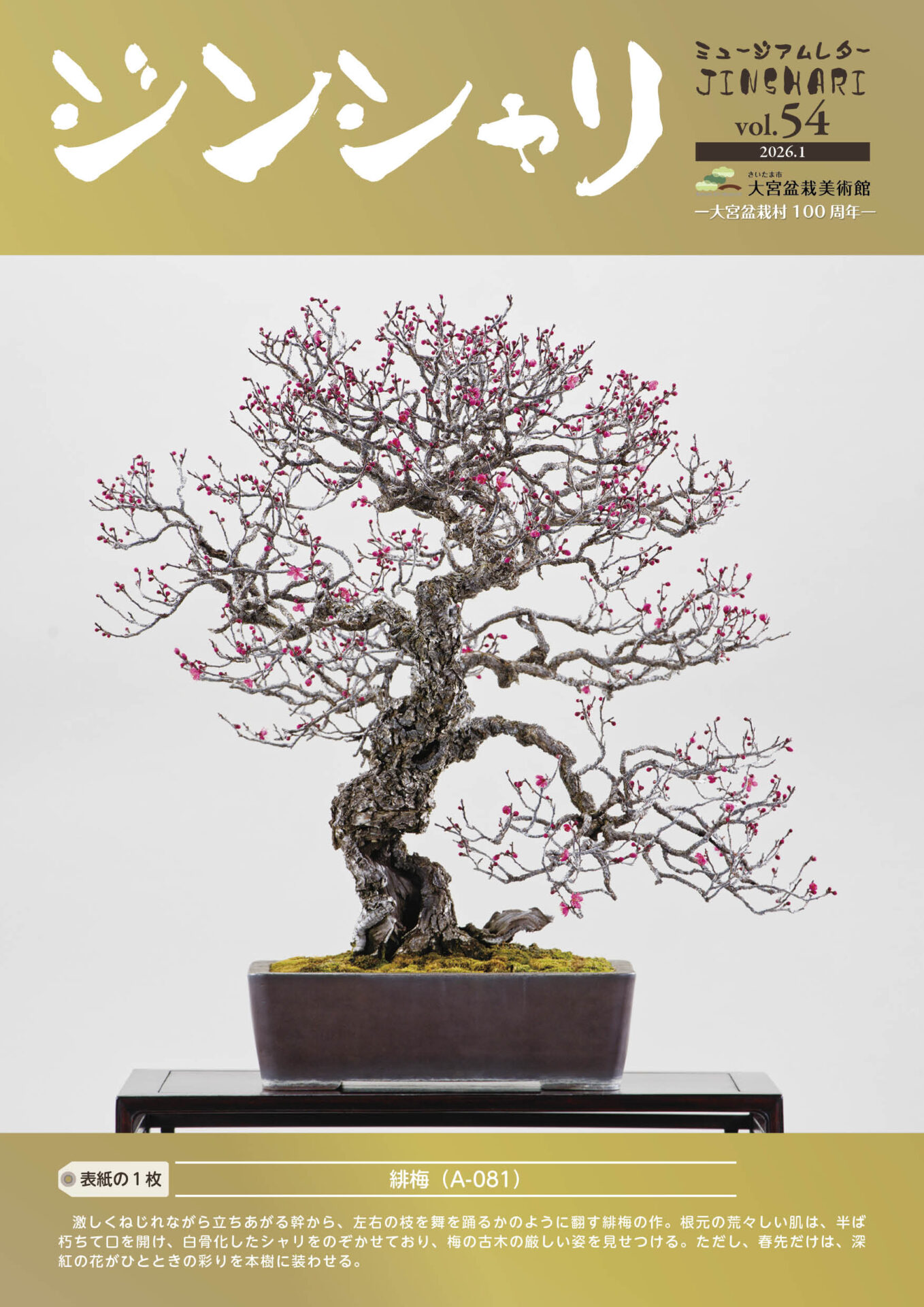
Jinshari Vol. 54
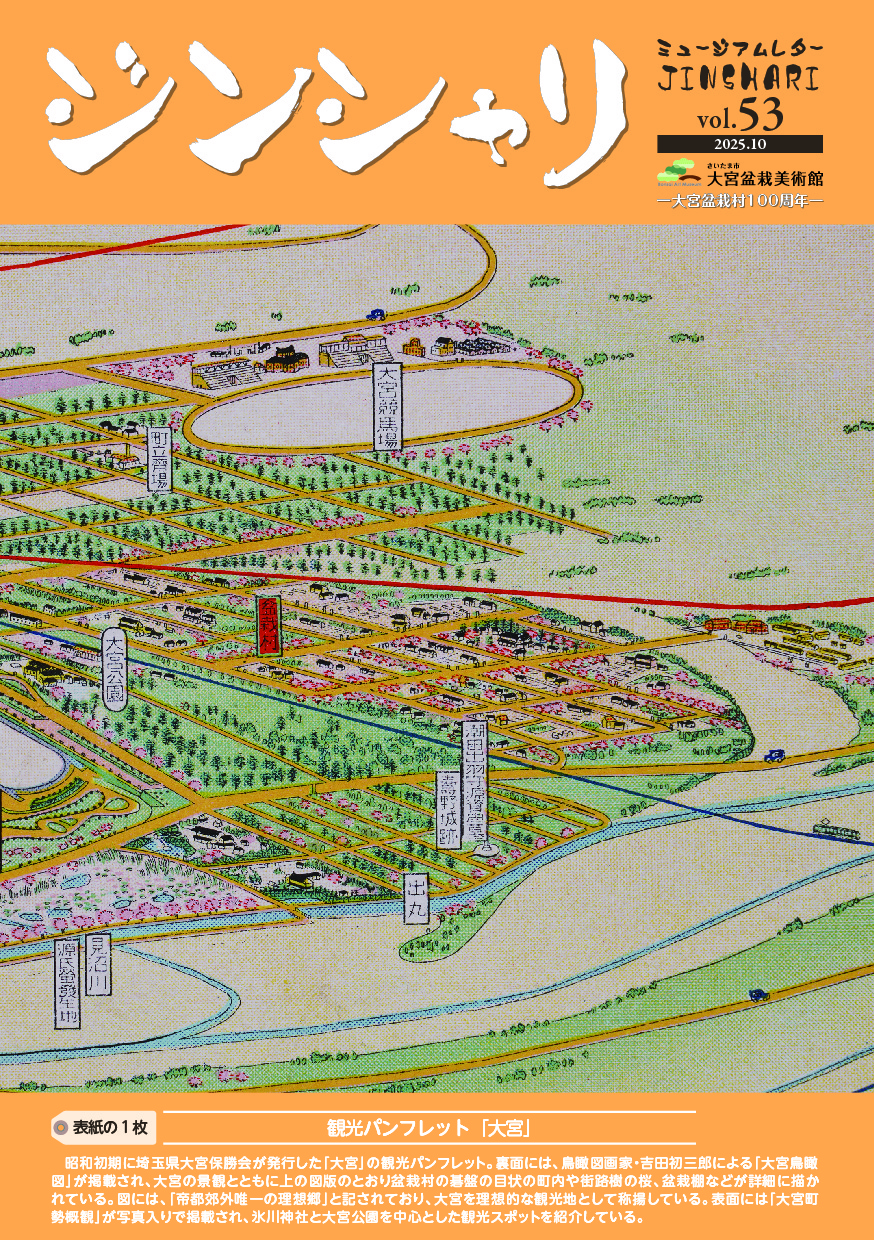
Jinshari Vol. 53
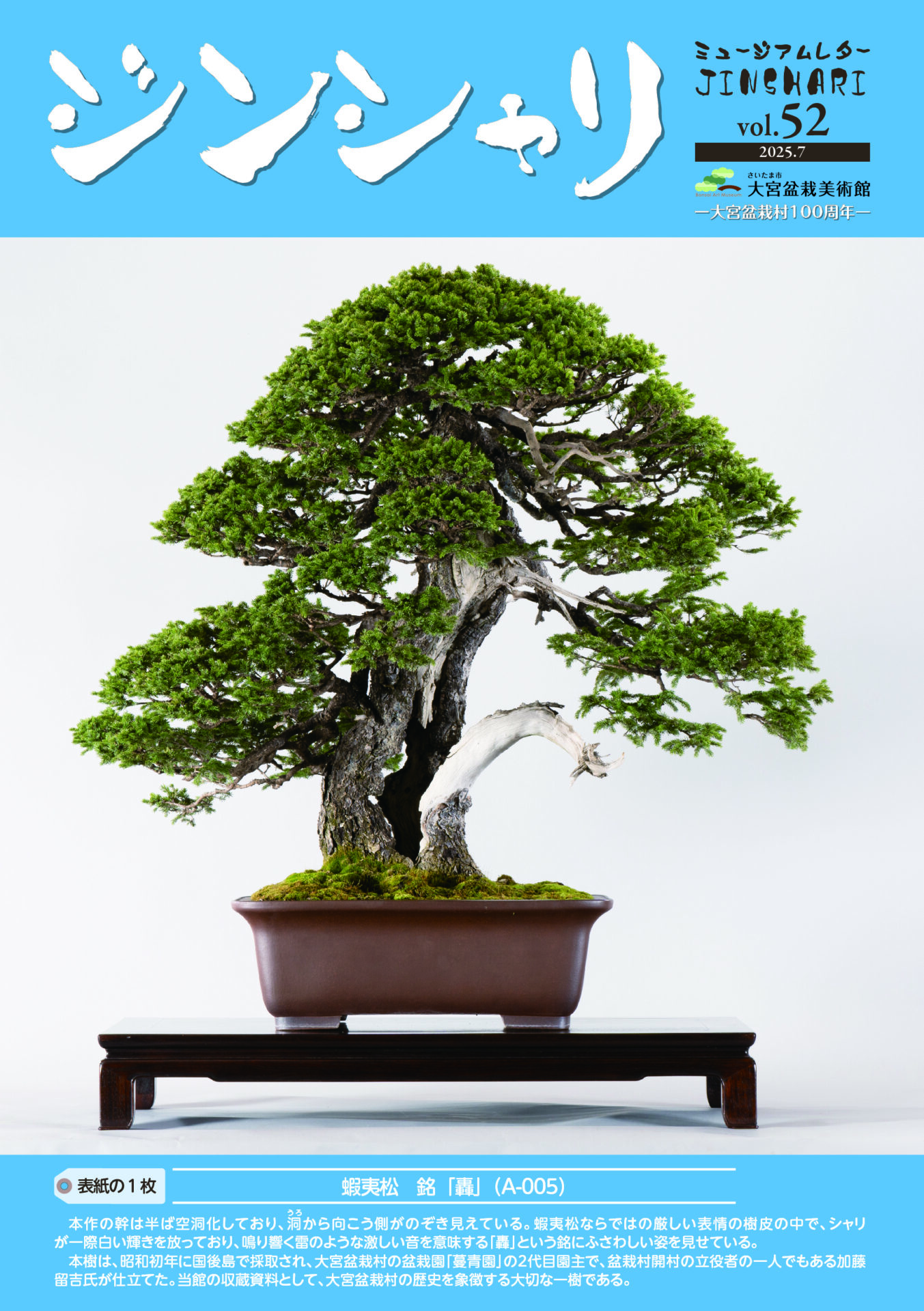
Jinshari Vol. 52
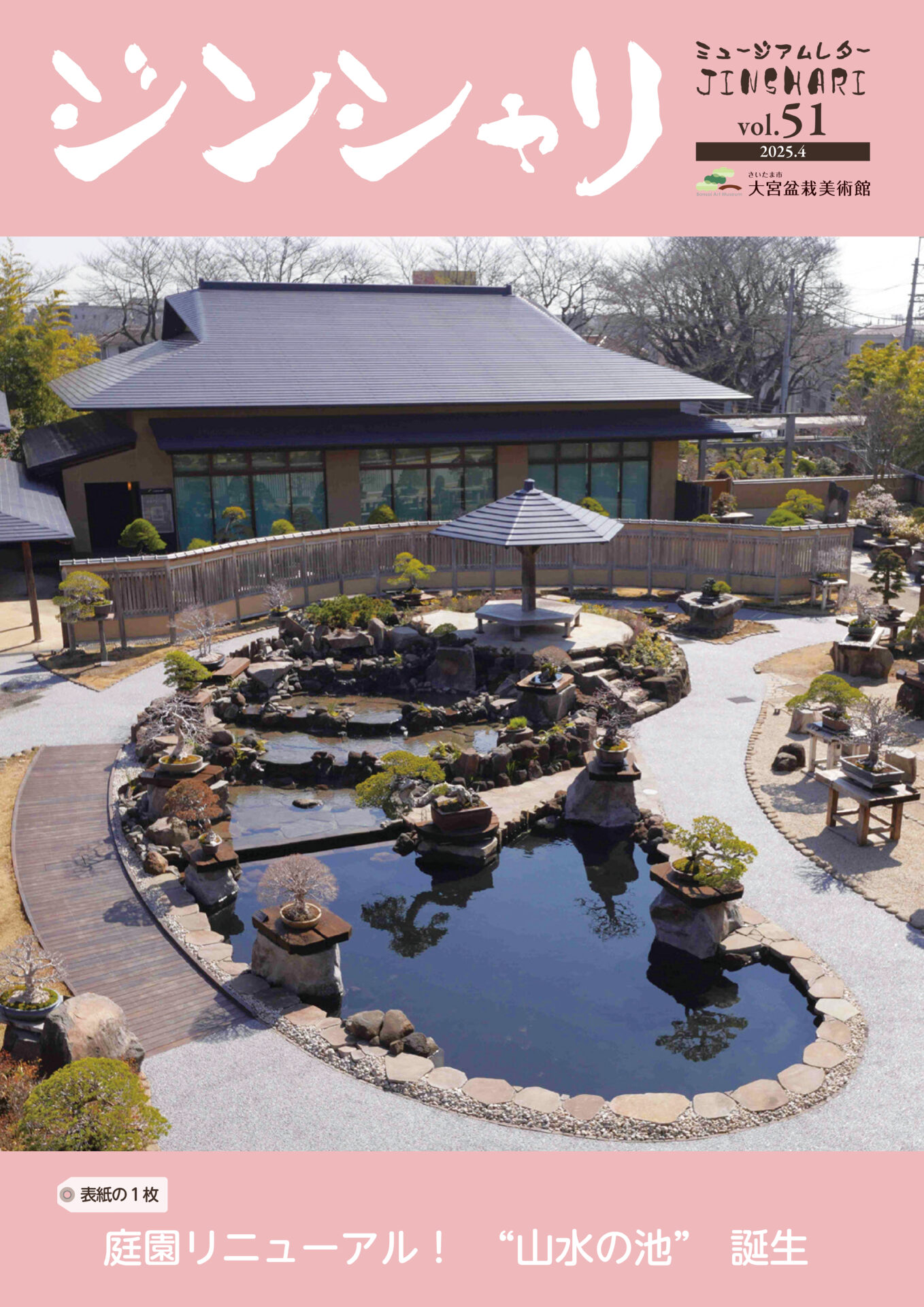
Jinshari Vol.51
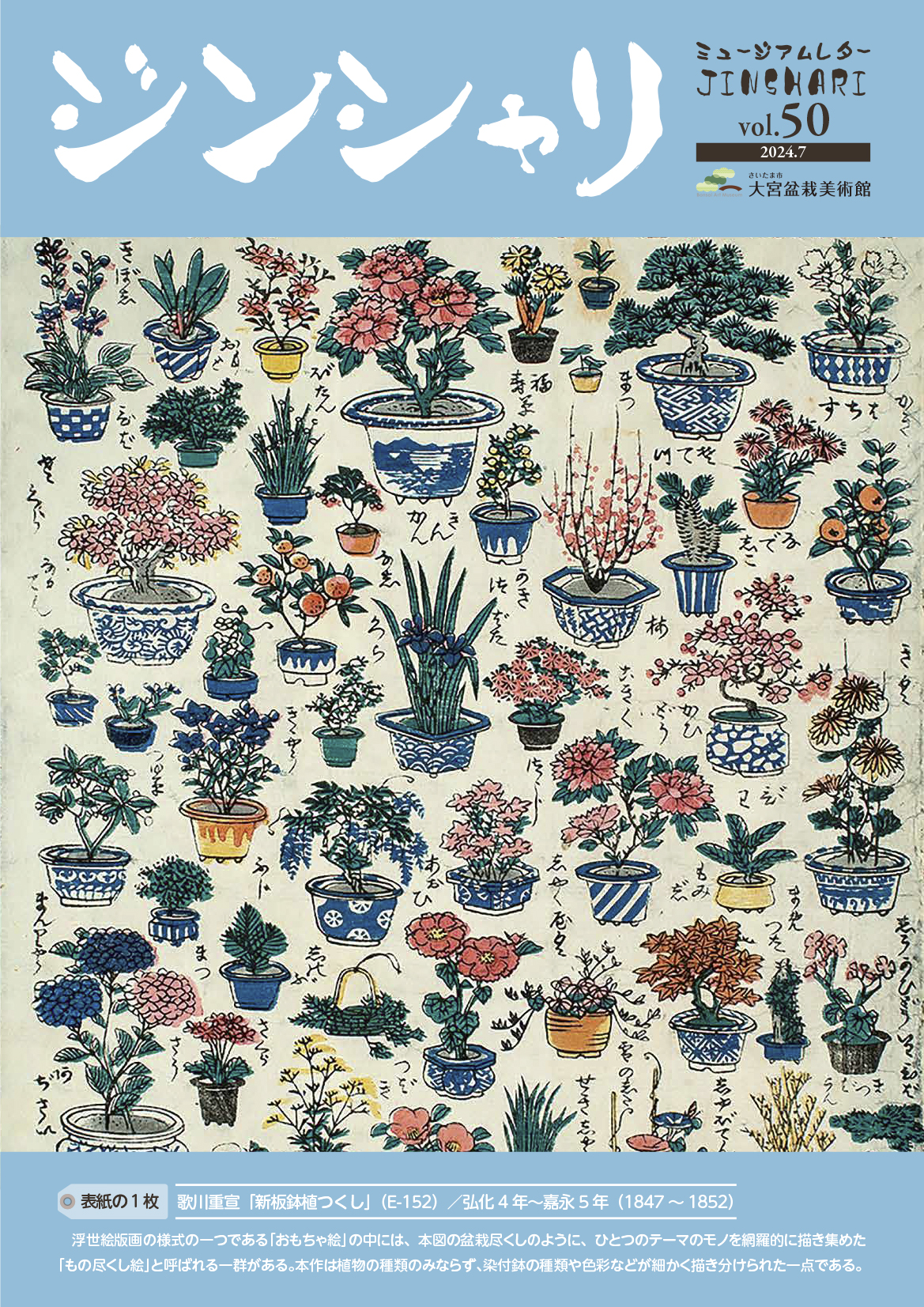
Jinshari Vol.50
