




Jinshari Vol. 52
-
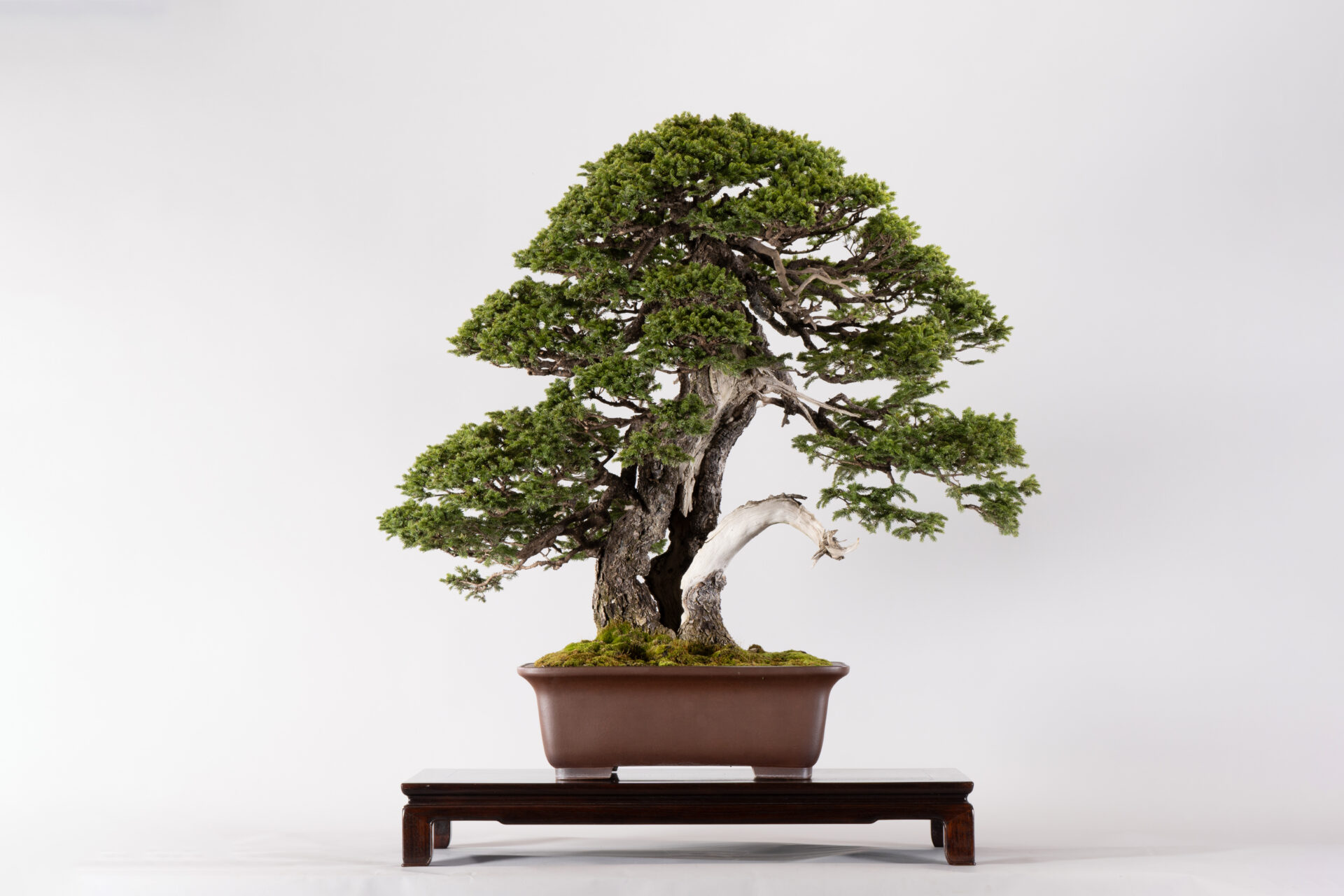
Front page: Ezo Spruce named Todoroki (A-005)
This tree’s trunk has hollowed out halfway, allowing you to see through to the other side through this cave-like feature. Together with an austere expression that only an Ezo spruce can offer and the bright whiteness of the shari (i.e., white deadwood), this bonsai is well suited to its name, Todoroki, which refers to the booming sound and rumble of thunder.
This tree was collected in 1926 on Kunashir Island. It was styled into a bonsai by Tomekichi Kato, the second head of Omiya Bonsai Village’s Mansei-en and leading figure in the development of Bonsai Village. This is a valuable piece within our collection that symbolizes the history of Omiya Bonsai Village.
Behind the Exhibits
Preparing for Omiya Bonsai Village’s 100th Anniversary: Bonsai Gardens in Bonsai Village
Omiya Bonsai Village has welcomed its 100th anniversary in 2025. Here at the museum, we plan to hold a 100th anniversary special exhibition introducing the history of Bonsai Village from October 3-December 10.
Now, how many bonsai gardens do you think there were in Bonsai Village? Here, we want to take a look at the number of gardens as a sneak peak into the special exhibition.
Currently, there are six bonsai gardens in the Bonsai Village. If we look back on the past through materials left behind by Kyuka-en in Bonsai Village, we can see that from when Bonsai Village was born (1925) to around 1928 there were approximately 16 gardens (including small gardens by bonsai aficionados) that opened up one after the other. Many of these first-generation bonsai gardens moved from Komagome in Bunkyo Ward, Tokyo, as well as from Takinogawa in Kita Ward.
Around when Bonsai Village entered its 10th year in 1935 it also welcomed its golden era in connection to the increase of bonsai fans throughout the world. As far as specific numbers go, there were 19* gardens in 1935 and 22† gardens around its peak in 1942. According to a newspaper report‡, however, the number of gardens dropped down to only three due to the influence of World War II. After the war, Bonsai Village was able to restore its vigor and in the 50s and 60s there was another bonsai boom. However, during this time, there was also an increase in land development for housing. Land around bonsai village started to grow sparse, so bonsai gardens started to pop up around Someya in Minuma Ward as well. From 1950s-70s, there were around 10 gardens in the village.
If you list out all the bonsai gardens that were in Bonsai Village, it can be confirmed that there were nearly 50 gardens total. The 100-year history of Bonsai Village can be said to have been woven by these numerous bonsai gardens and bonsai enthusiasts who were drawn to and moved here.
At the exhibition, we will showcase maps and photographs that provide a glimpse into these bonsai gardens, as well as materials that trace the history of the first-generation bonsai gardens, so please come check it out!
*Kusamura-kai “Bonsai” Vol. 15, Issue 12, 1935 November 5.
† “Seisen kinen kokumin hōkō-roku,” Teikoku rengō tsūshinsha (News Agency), 1942 June 30
‡ “Omiya bonsai mura no tenshin,” Saitama Shimbun, 1943 December 24
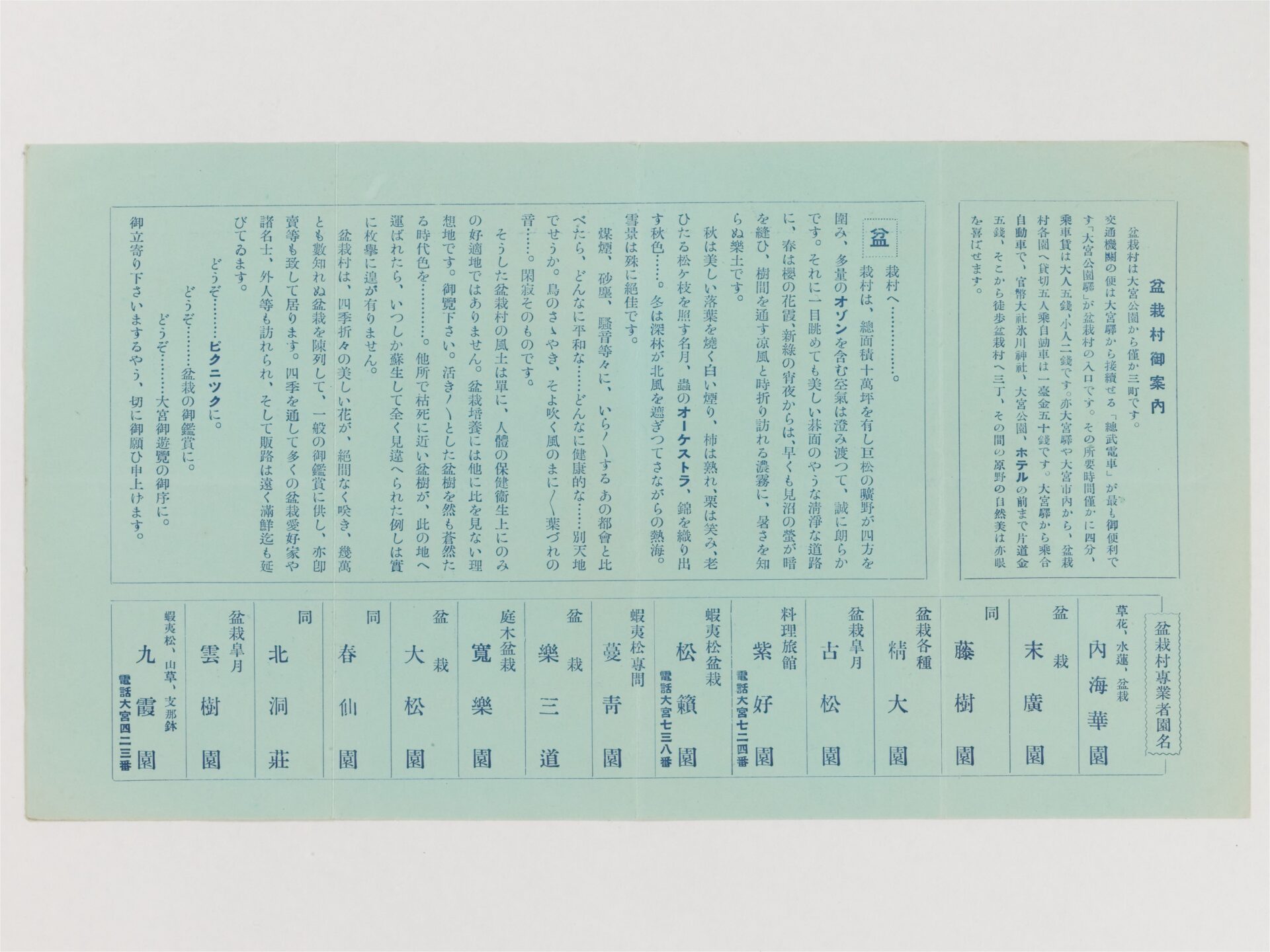
“Famous Places in Omiya Bonsai Village” tourism pamphlet from 1935. An illustrated map on one side of the pamphlet lists 14 bonsai gardens and one Japanese style inn as “bonsai specialty shops in bonsai village.”
An Artisan’s Work
Protecting the Bonsai Through Disinfection Work at the Museum
As summer draws closer and the temperature rises, there are many kinds of diseases and bugs that can hurt plants. Particularly for bonsai, being planted in a small pot and having their leaves and branches thinned out from pruning causes them to be more susceptible to the influence of insects and diseases, leading to them quickly losing their health. Above all, bonsai are one-of-a-kind pieces with no substitutes; since many of the bonsai at the Omiya Bonsai Art Museum are old trees over 100 years old, the museum regularly performs pesticide application on them.
As part of our pest and disease prevention efforts, insecticides are sprayed once every two weeks from spring through fall, while fungicides are sprayed only in spring and fall, also once every two weeks. We conduct these operations during cool periods, such as in the evening on days when the museum is closed or after closing time, when the weather is clear and there is no wind. Other plants in the garden are also sprayed, so each session takes about two hours.
Normally it is enough to spray pesticides once a month, but at the museum we make sure to always do it once every two weeks. The reason is because occasionally insect eggs survive the initial application and by the time of the next spraying they will have developed into larva.
Furthermore, disease-control treatments vary depending on the type of disease, so adequate knowledge is necessary. Since the chemicals used for pest and disease control are primarily intended for agricultural crops such as fruit trees, flowers, and vegetables, there are few examples of their use on the trees used in bonsai. Therefore, our artisans carefully consider whether to use them through conducting their own experiments and by exchanging information with other bonsai nurseries.
There are many different tasks carried out regarding pest and disease control to maintain the health of the bonsai that guests are unable to see. With this in mind, please continue to be careful around the bonsai and not touch them as they may have been recently sprayed.
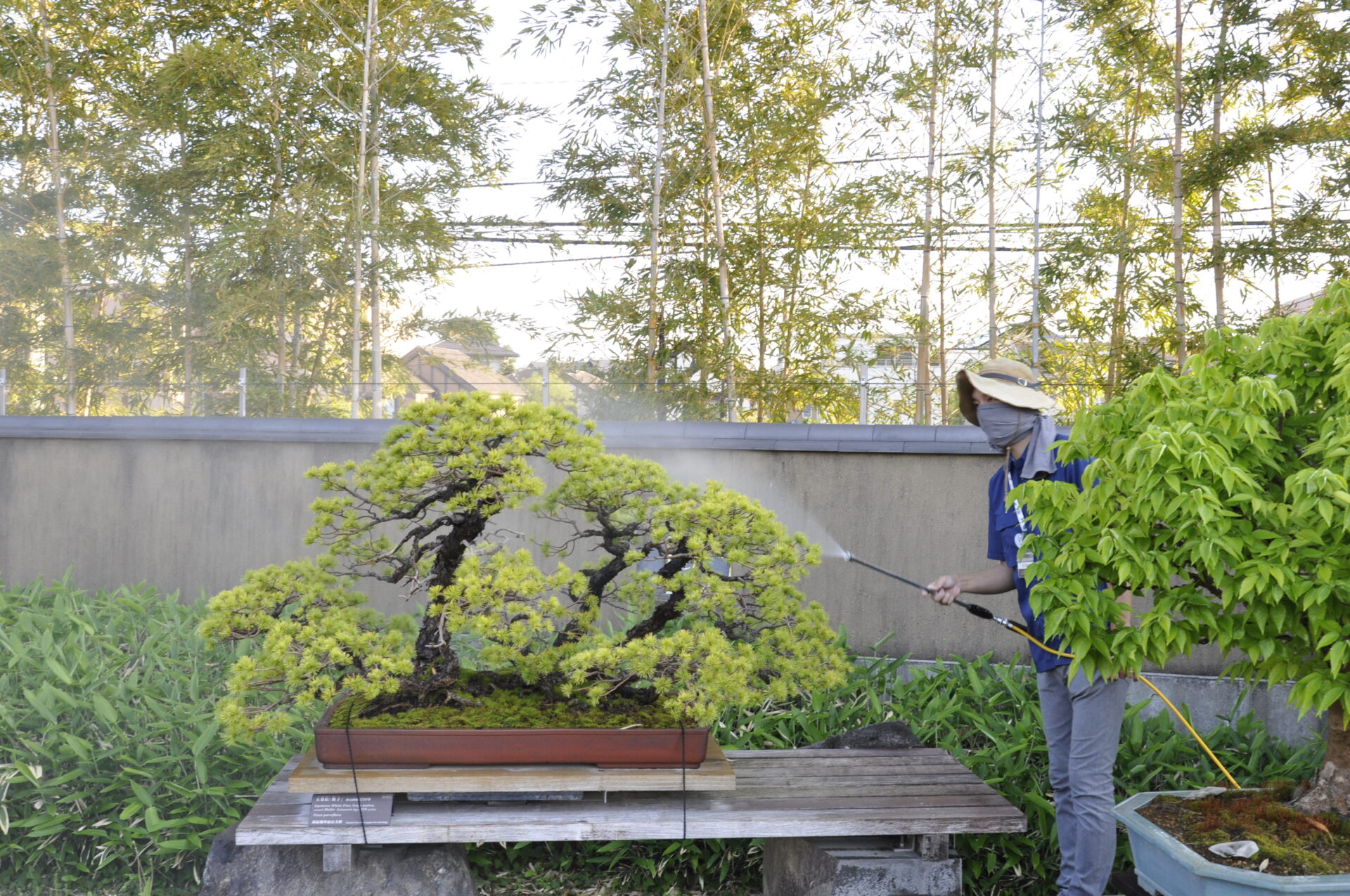
Spraying the disinfectant.
The Supporter Reporter
Exhibit Guides—Having Fun with Museum Guests
The “Museum Supporters” volunteer group was formed at the Omiya Bonsai Art Museum to help with the museum’s various operations and activities. For this issue’s Supporter Reporter, we will introduce the activities held during the Dai-Bonsai Matsuri held from May 3rd to the 5th.
We held tours from May 3-5 during the Dai-Bonsai Matsuri (festival). We got to enjoy the charm of bonsai while walking around with many visitors. During this period, the museum welcomed around 2000 visitors every day, largely exceeding the number of people from last year.
The vibrant green of the young leaves and new shoots were a feast for the eyes and gave the centuries-old bonsai a renewed sense of vitality. The water flowing in the newly renovated garden pond was soothing amid the 25°C days. Its refreshing sound also echoed pleasantly. Seiryū (Japanese white pine), reflecting on the water’s surface, was also a popular photo spot that drew the attention of many visitors.
From families experiencing bonsai for the first time to seasoned enthusiasts who purchased bonsai at the festival, as well as visitors from abroad, everyone was eagerly enjoying the exhibition. I believe they were able to appreciate the overwhelming presence and beautiful forms of the bonsai, as well as their history and the artisans’ passion that has been poured into them. As supporters, we continue to learn through our training, and we look forward to sharing the story of bonsai—a tradition passed down for over 100 years—with many more people in the future.
Us supporters hold group tours called “Welcome Museum!” every Saturday, Sunday, and Monday. Please feel free to ask us anything when you visit the museum!
Museum Supporter Yoichi Shirakawa
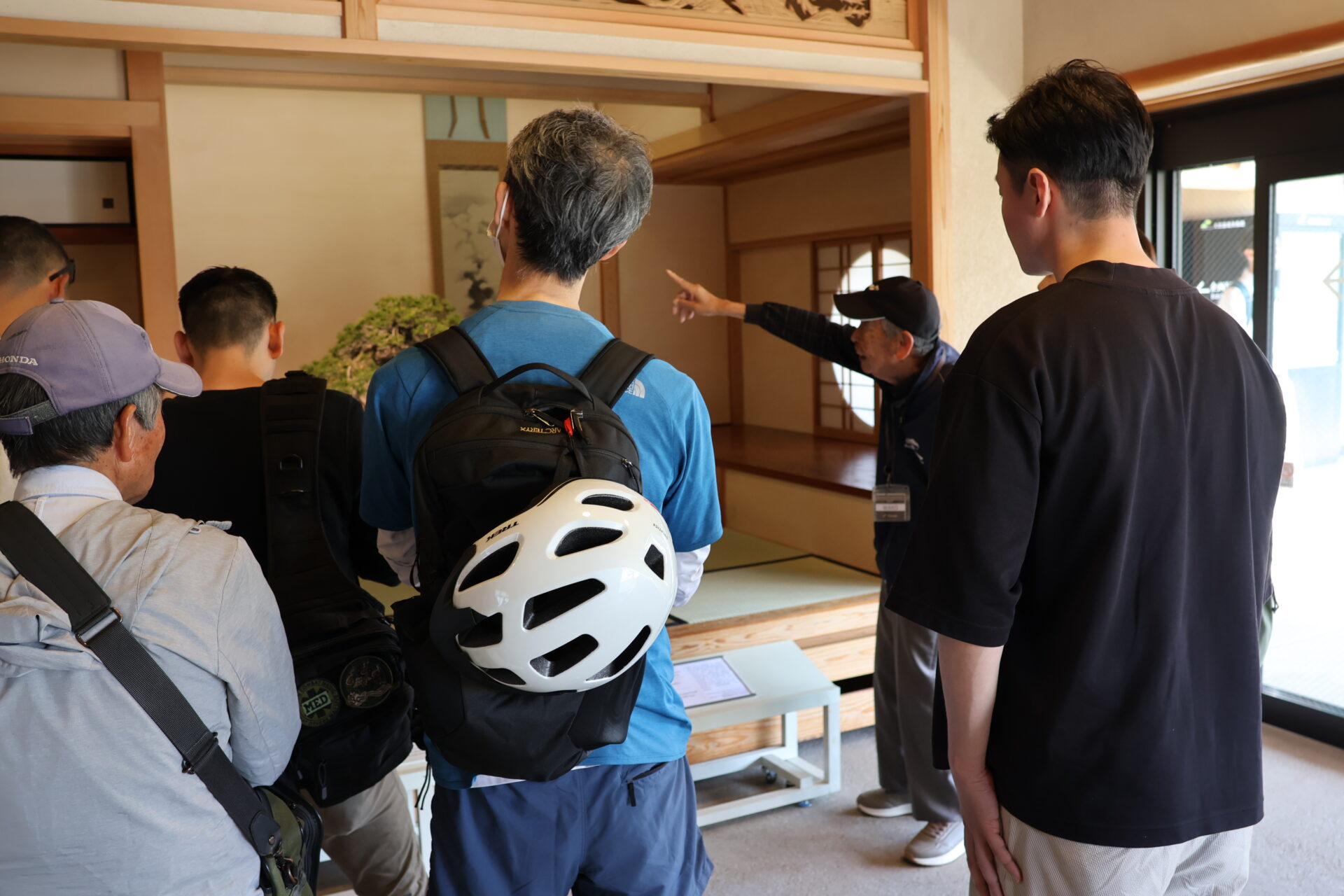
Everyone listening intently.

Some people also ask questions.
(Related page) Exhibition Guides (Welcome Museum! (Exhibition Tour Guide), Group Guide)
Back number
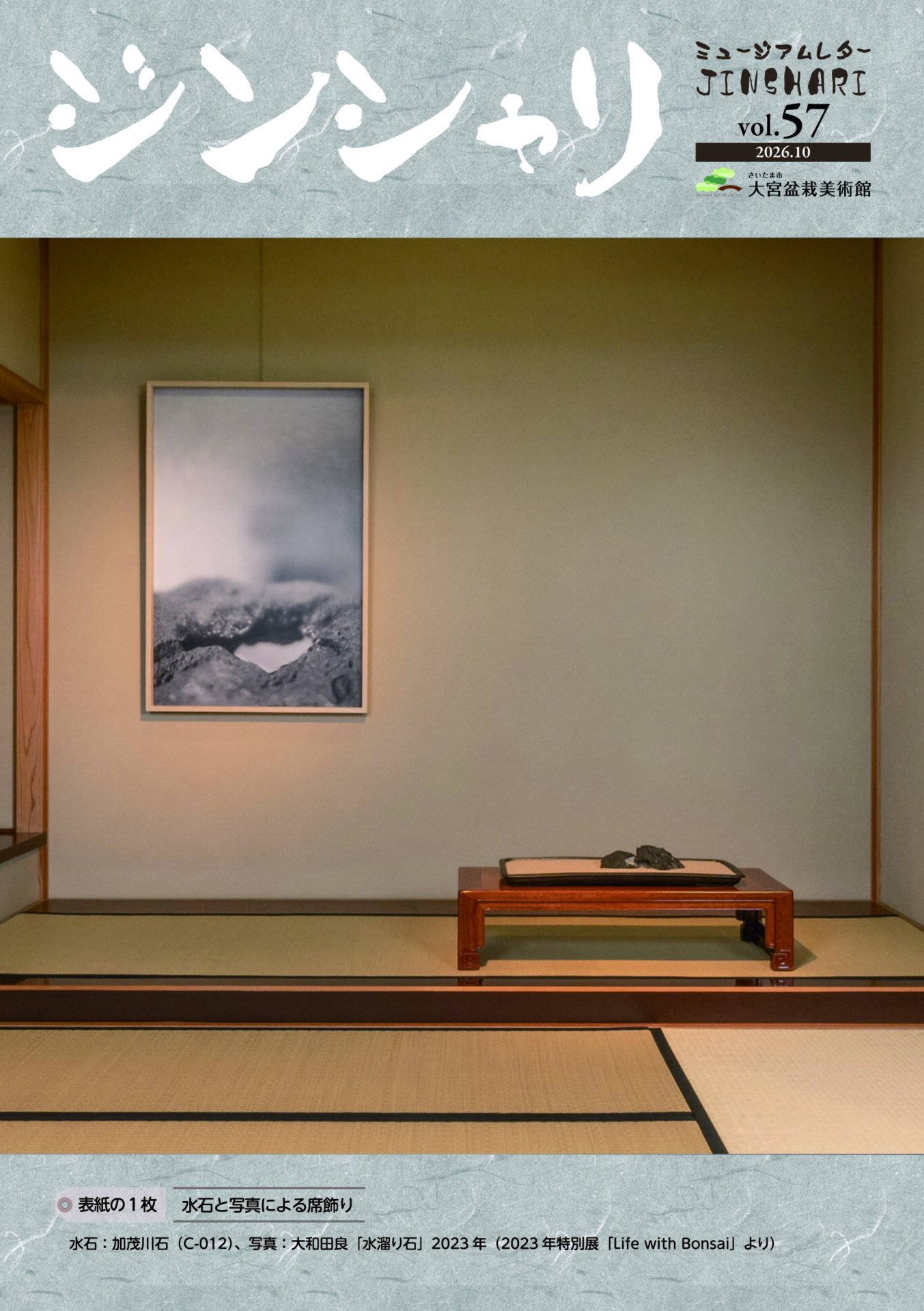
ジンシャリ Vol.57
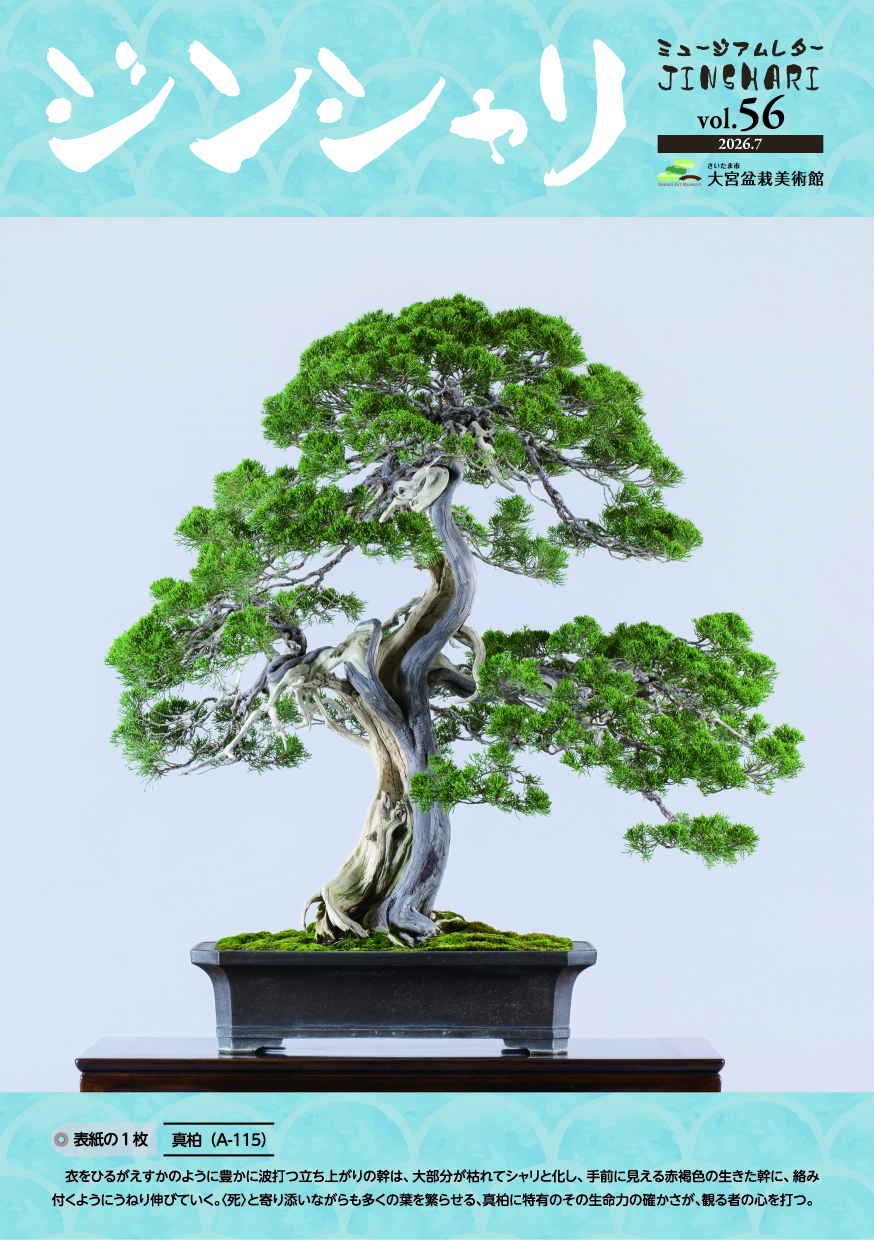
Jinshari Vol. 56
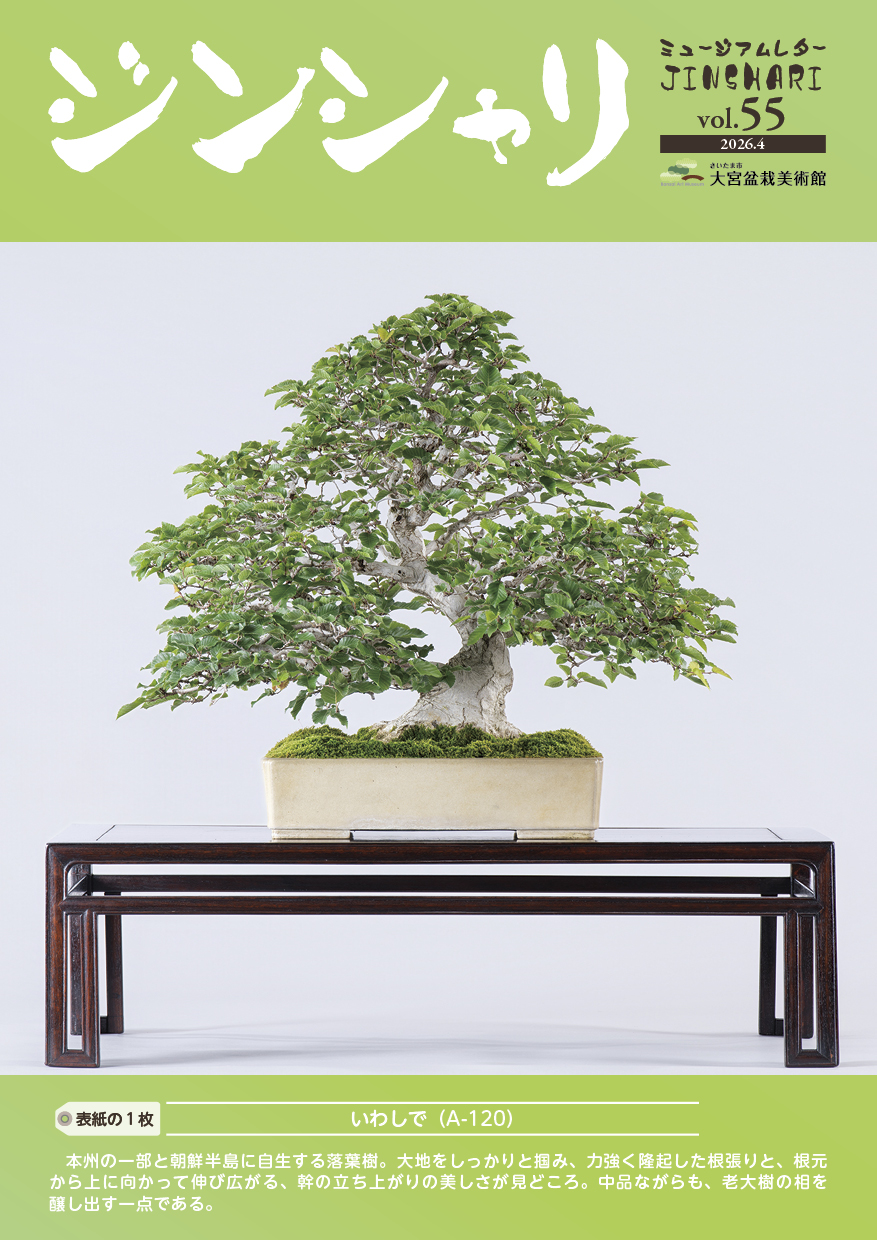
Jinshari Vol. 55
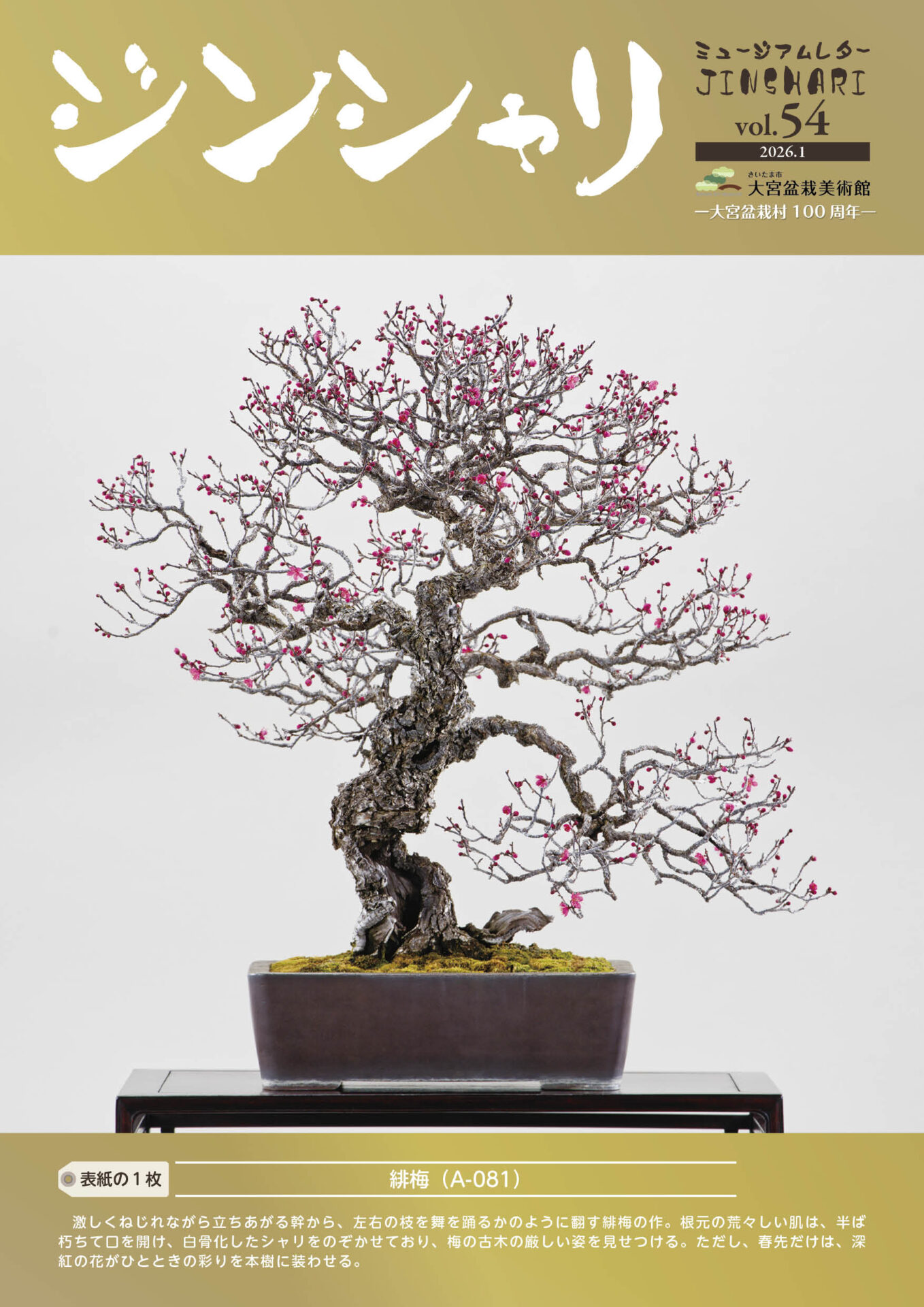
Jinshari Vol. 54
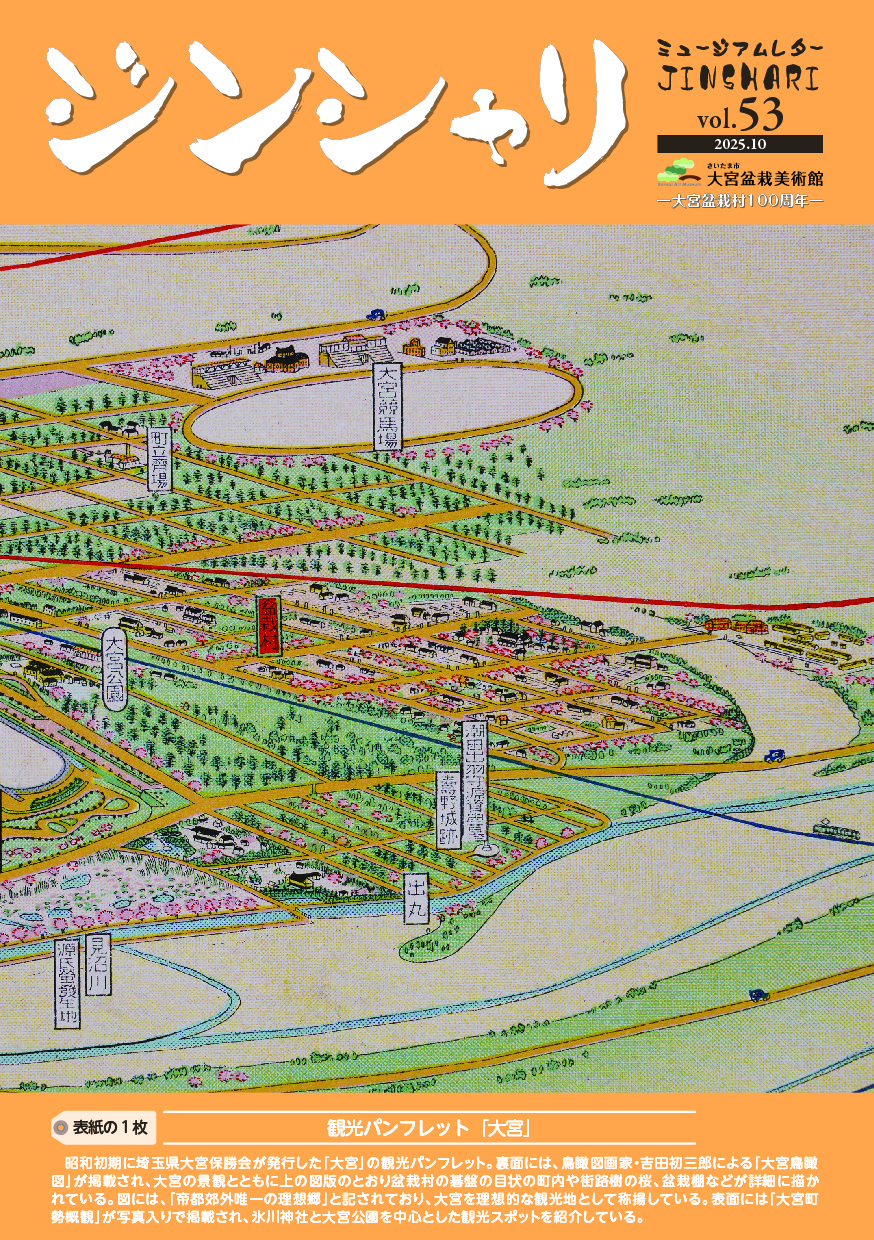
Jinshari Vol. 53
