




Jinshari Vol. 55
-
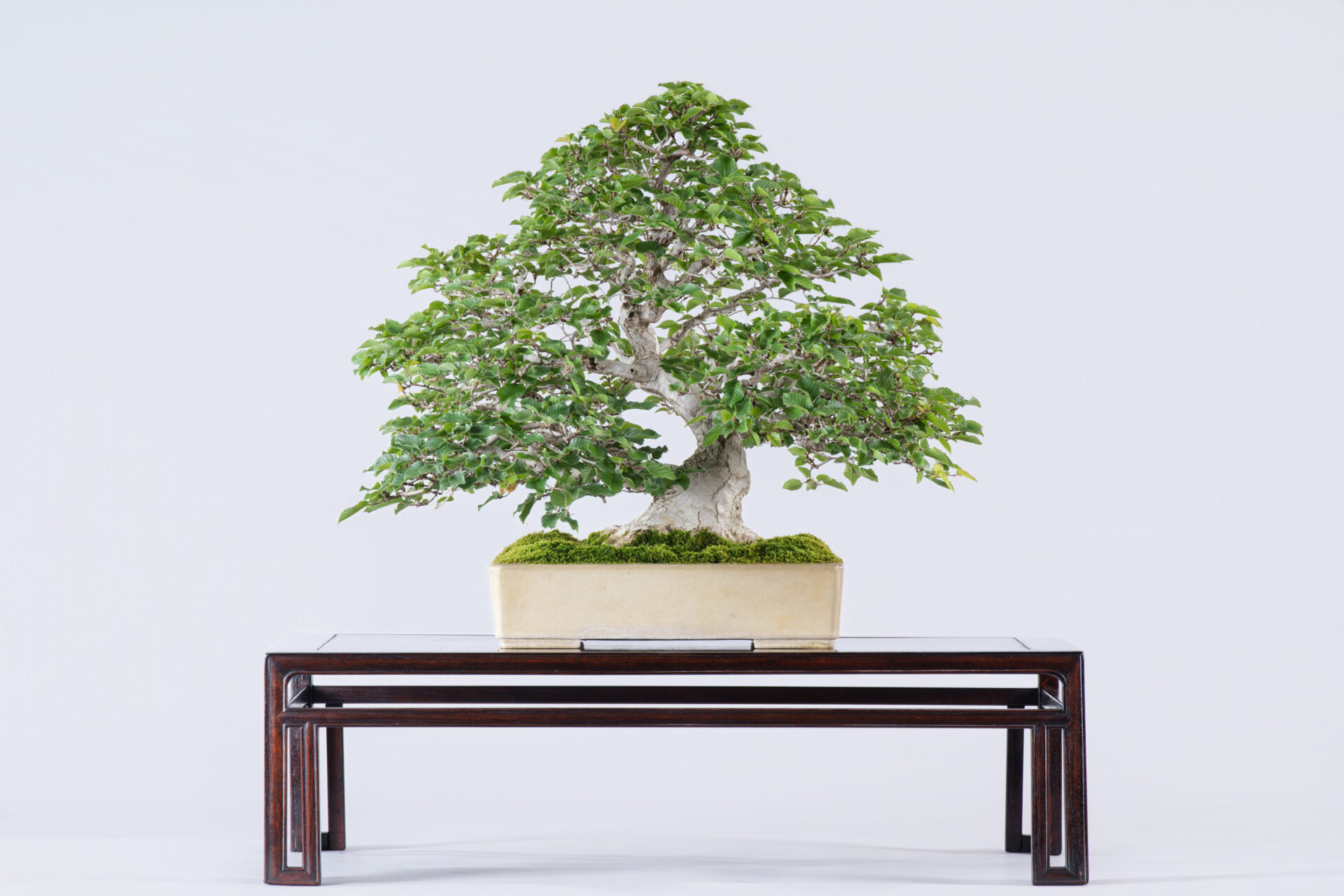
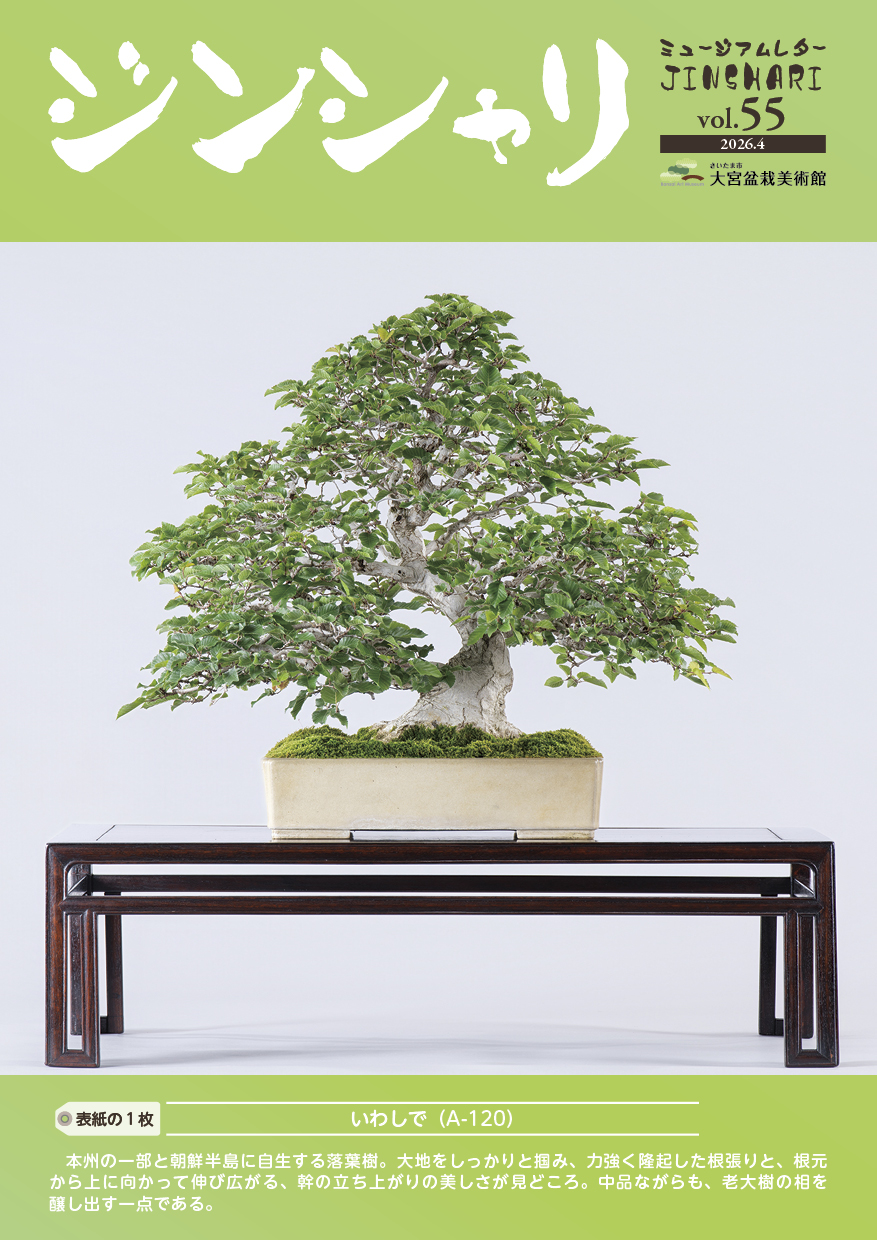
Front page: Korean Hornbeam (A-120)
This deciduous tree is native to parts of Honshu and the Korean Peninsula. Its highlights include its spreading roots that grip the earth firmly and rise powerfully, as well as the beauty of its rising trunk that spreads outward. Though of medium size, it exudes the presence of a grand, ancient tree.
Behind the Exhibits
Let’s Celebrate! 50th Anniversary of the National Bonsai & Penjing Museum - U.S. National Arboretum
From March to May of 2026, as part of the regular exhibition “Bonsai Chronicle: History and Culture of Bonsai” (Venue: Exhibition Room), we will display panels detailing the history of the establishment of the U.S. National Bonsai & Penjing Museum, a national bonsai exhibition facility located in Washington, D.C.
We are holding this exhibition because this year marks the 50th anniversary of the museum’s opening in July 1976! It is also a significant event from a cultural-historical perspective regarding the internationalization of bonsai—specifically, how the United States’ only national bonsai exhibition facility came to be established.
We entered into a sister museum partnership with the National Bonsai & Penjing Museum in August 2019 to promote bonsai exchange between the United States and Saitama City and to enhance the value of bonsai culture. We organized this panel exhibition as a gesture of congratulations to the curators and staff of the museum, with whom we continue to have cultural exchange.
The museum is located approximately 6 kilometers northeast of the White House, just inside the U.S. National Arboretum, which is administered by the U.S. Department of Agriculture. The details of its establishment are covered in the exhibition room, but we will mention that the museum was opened as a public exhibition facility after the U.S. received a donation of 53 bonsai and 6 suiseki (viewing stones) from the Nippon Bonsai Association in 1975, the year prior to the museum’s opening.
The 2019 sister-museum agreement signing ceremony took place inside the Japanese Pavilion, which serves as the exhibition venue for the bonsai trees gifted by Japan. There, Saitama City Mayor Hayato Shimizu and Richard Olsen, Director of the U.S. National Arboretum, exchanged signatures.
The panels used in this exhibition were created in 2017 by Kathleen Emerson-Dell, a researcher at the Arboretum, based on a book by John Creach, the Arboretum’s former director, who had worked tirelessly to secure the donation of bonsai in 1975. As part of our sister-museum partnership, we received the exhibition data in 2019, translated the content into Japanese, and then produced the physical panels. Behind Mr. Creach’s efforts to establish a national bonsai exhibition facility lies the story of a Japanese bonsai artist who traveled alone to the United States in 1958 and went on to spread bonsai throughout the world. His achievements are documented in the 2019 special exhibition catalog commemorating the sister-museum partnership, “Yuji Yoshimura, A Bonsai Artist Across the Ocean; New York, 1958,” which we encourage you to explore.
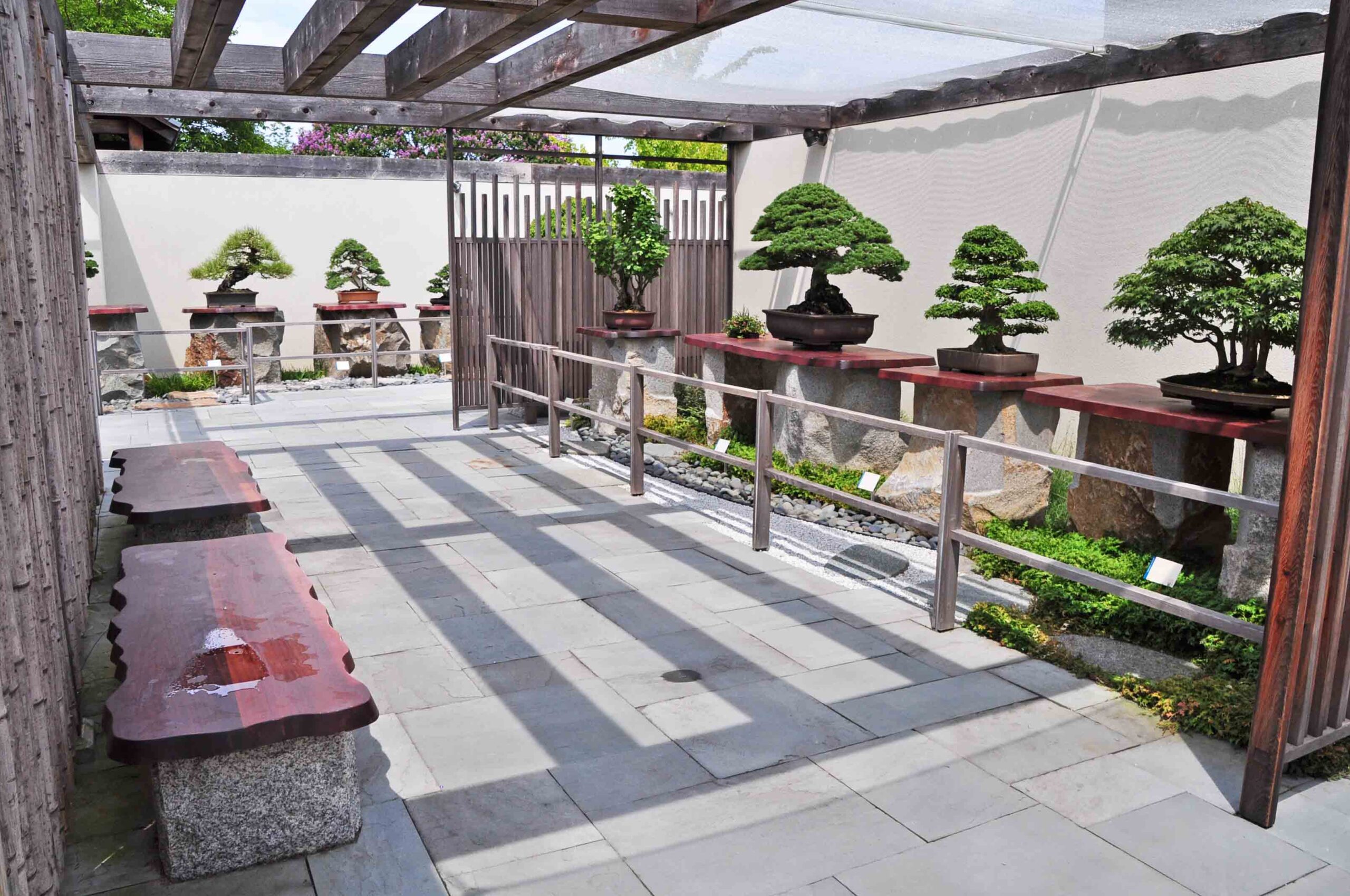
The National Bonsai & Penjing Museum
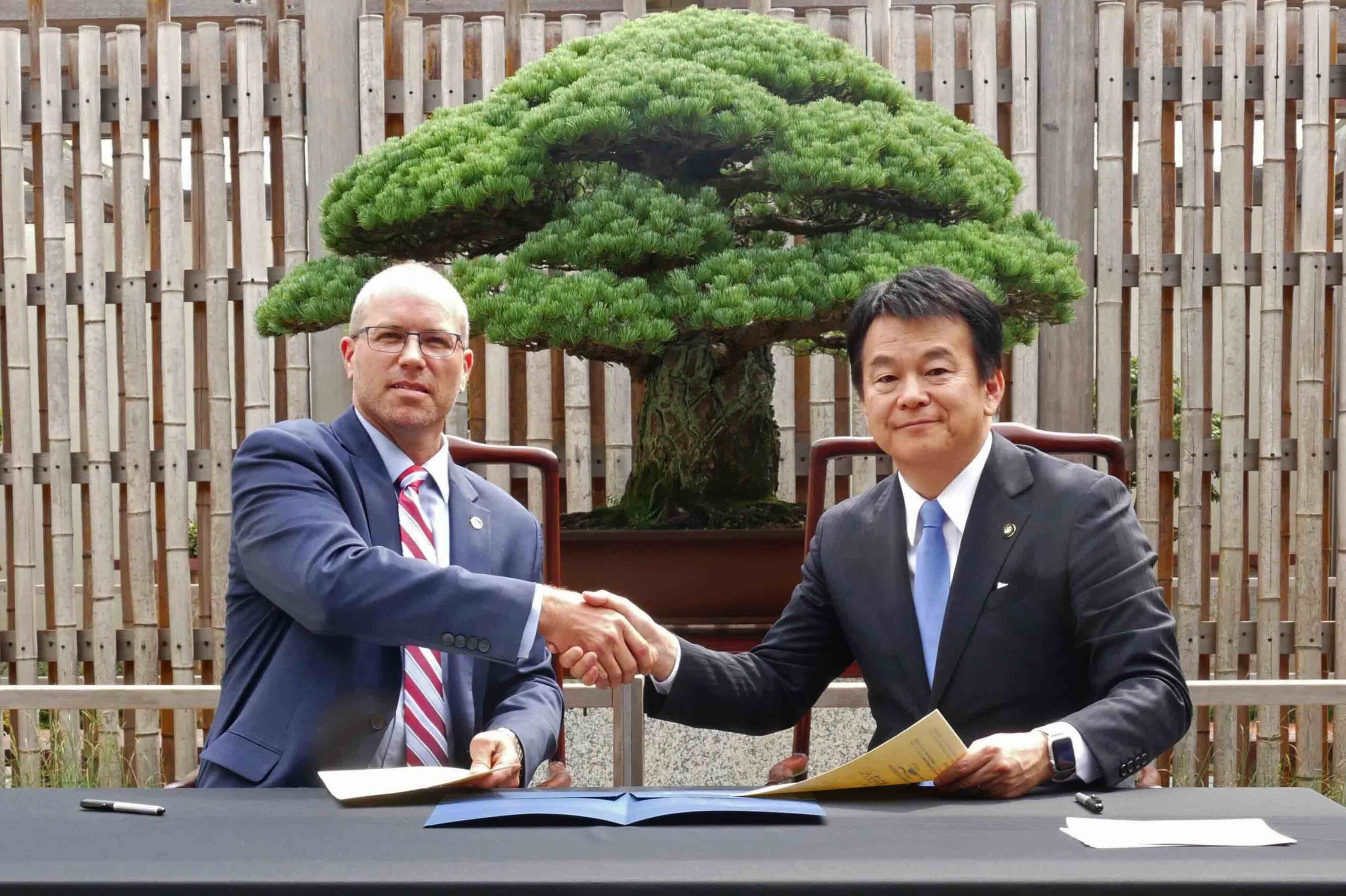
Sister-museum agreement signing ceremony (August 5, 2019)
An Artisan's Work
Japanese Black Pines and Short Needles: The Unique Techniques of Bonsai
This Japanese black pine is prized for its rugged bark and dense, deep-green needles. Take a close look at its trunk, branches, and needles. In its natural state, the black pine’s needles grow long, obscuring the powerful form of its trunk and branch placement. The fact that the needles on this bonsai are short and neat is not because it is a special variety, but rather the result of an artisan’s skill.
This technique is known as the short-needle method. Simply put, it is a unique bonsai care method designed to encourage needles to grow shorter, in keeping with the small scale of bonsai. Its defining feature is that, rather than physically cutting the needles, it applies the mechanisms of nature to regulate the growth process itself. It is particularly effective for black pine and can also be applied to red pine. As the needles become shorter, the overall form becomes more compact, further enhancing the bonsai’s appeal.
The work proceeds from bud cutting (cutting new shoots at their base) in June and July to bud thinning (removing unwanted buds) in July and August, and finally to leaf thinning (thinning out the previous year’s leaves) in September and October. Among this series of tasks, bud cutting is particularly important. By encouraging the growth of weaker secondary buds and shortening the growing season, the needles can be naturally kept short. The timing and methods of these tasks require careful adjustment based on the local climate, the condition of the tree, and sunlight exposure. Since the work involves checking the number and condition of each needle and branch individually, it demands patience and effort. Even the slightest difference in judgment can affect the final result, and sometimes failures occur; this is truly a technique where the experience and observational skills of the craftsman make all the difference.
The creator of this technique was Saichi Suzuki, the first owner of the Daiju-en bonsai garden in Okazaki City, Aichi Prefecture. Noticing that short, lateral needles had sprouted from a black pine whose new buds had been eaten by insects, he conducted extensive research and perfected the short-needle method.
Previously, needle growth was restricted by drastically limiting fertilizer and water; however, with the advent of the short-needle method, it has become possible to grow short, robust needles while also maintaining the health of the tree. This has expanded the range of cultivation techniques, allowing us to shape high-quality trees more quickly and reliably, which has significantly enhanced their artistic value as bonsai.
If you observe black pines in a bonsai garden, you’ll likely notice the difference between those that have been cared for and those that haven’t. Even in something as simple as the length of the needles, you can sense the quiet ingenuity and skill of a bonsai artisan.
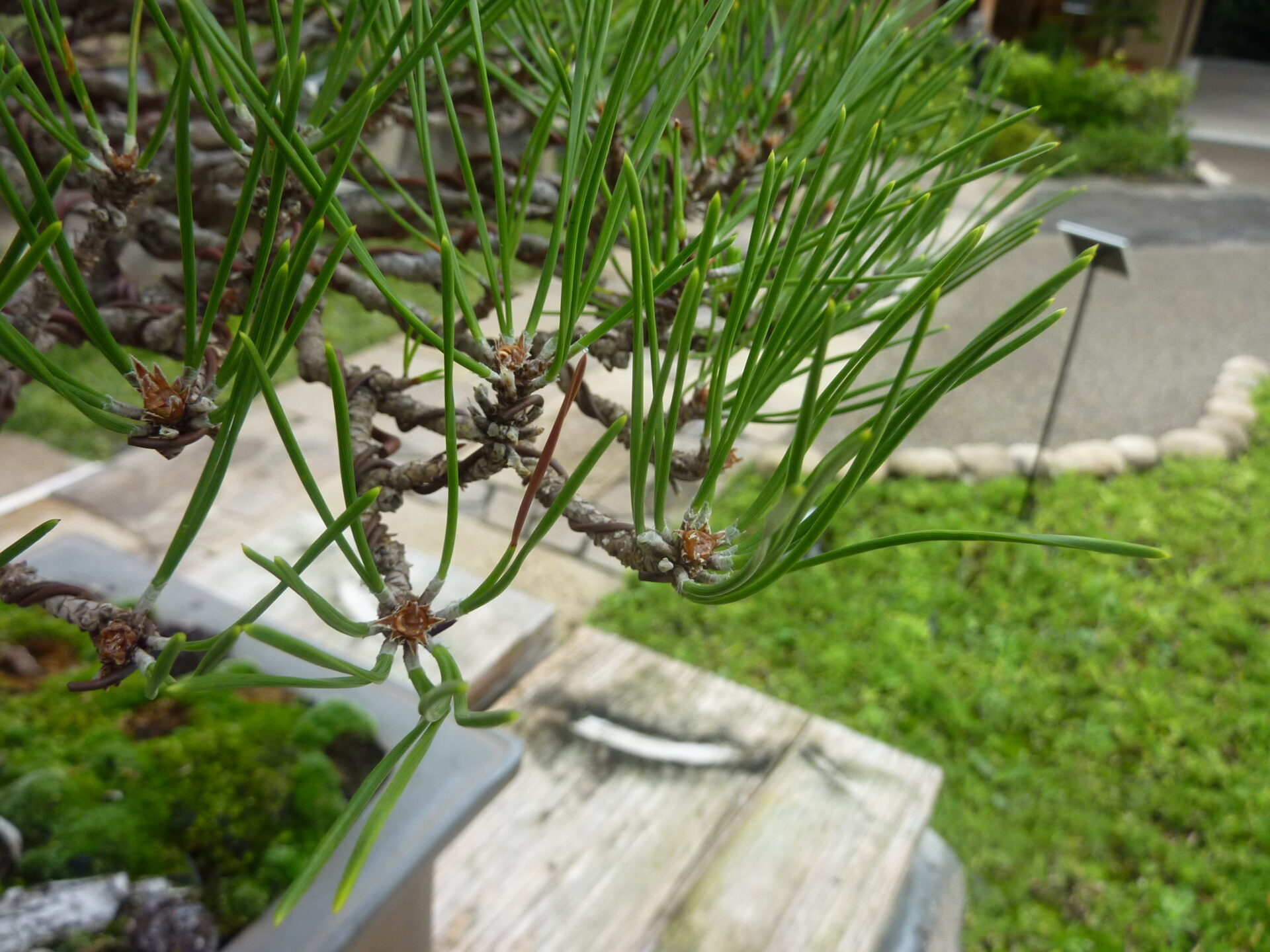
After bud pruning
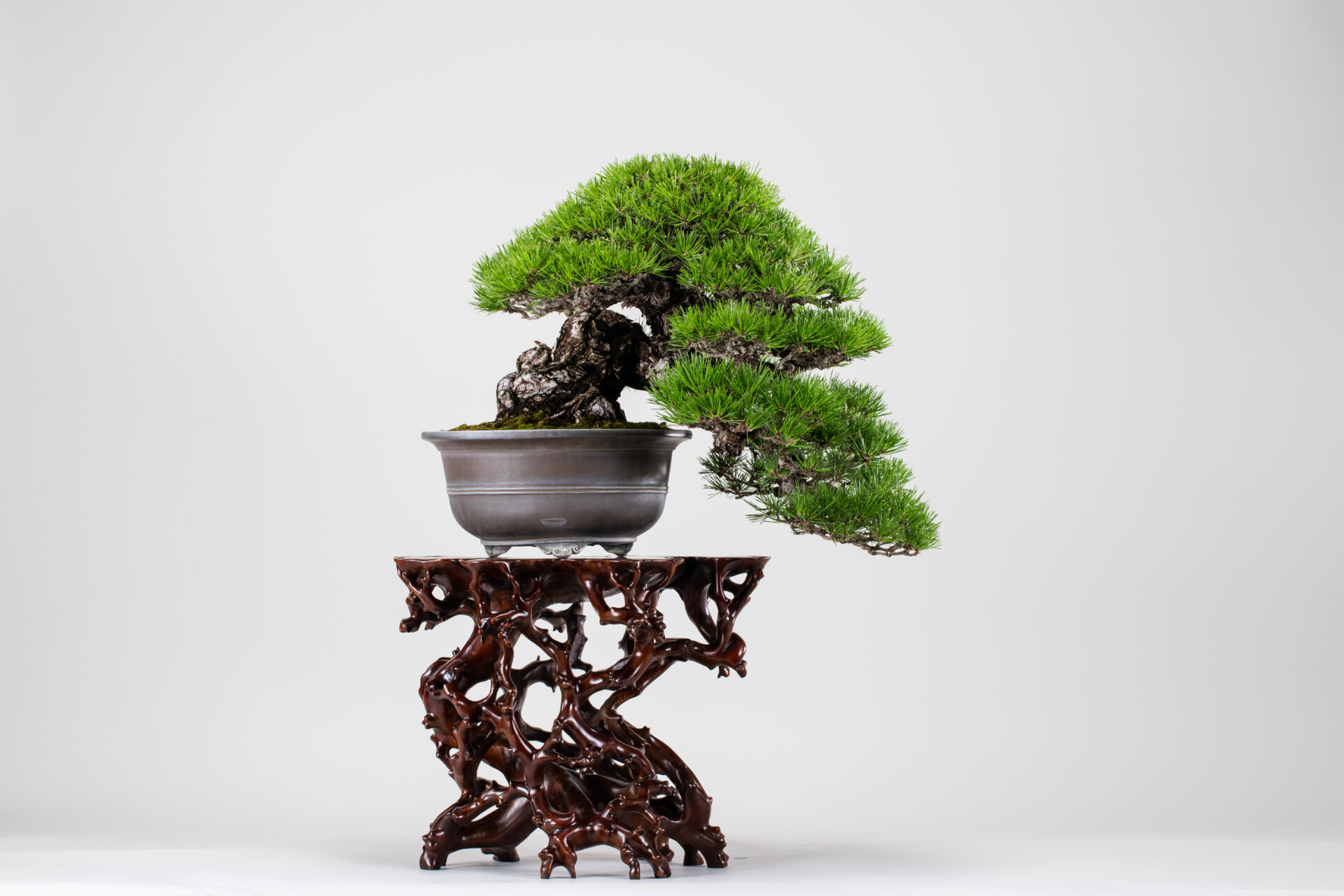
A Japanese black pine (A-069) whose buds have been pruned
The Supporter Reporter
Spreading Bonsai Through Connection: A Moss Ball Bonsai Workshop at the Community Center
The “Museum Supporters” volunteer group was formed at the Omiya Bonsai Art Museum to help with the museum’s various operations and activities. For this issue’s Supporter Reporter, we will report on a moss ball bonsai workshop held at a community center.
In addition to our on-site programs, the Omiya Bonsai Art Museum also offers off-site bonsai workshops that bring the art to local communities. In this report, we’ll share highlights from the moss ball workshop held at the Minami-Urawa Community Center in November 2025.
There were 20 guests who participated. We first started with a lecture from a museum curator; everyone listened closely to the explanation of the history of Bonsai Village and how to view bonsai. Next, we started making the moss ball bonsai. The tree used for this workshop was marlberry, which produces adorable, red berries. Everyone seemed very focused as they formed the soil into balls and wrapped it in moss. Us supporters stepped in and helped when the participants seemed to be struggling a little. What was particularly memorable for me was the way the participants seemed to be relieved when we helped them.
Everyone looked so happy when they placed their finished moss ball bonsai on their decorative ceramic trays. Us supporters are overjoyed and encouraged whenever we are told “thank you” by participants. I myself became a supporter only last year in April, but I feel a lot of satisfaction in helping share the fun of bonsai with everyone.
A moss ball bonsai you’ve created with your own hands is as precious to you as your own children. We hope you’ll cherish and care for them at home.
Won’t you also join us in experiencing the joy of creating, nurturing, and displaying moss ball bonsai?
Museum Supporter Kazumasa Sueda
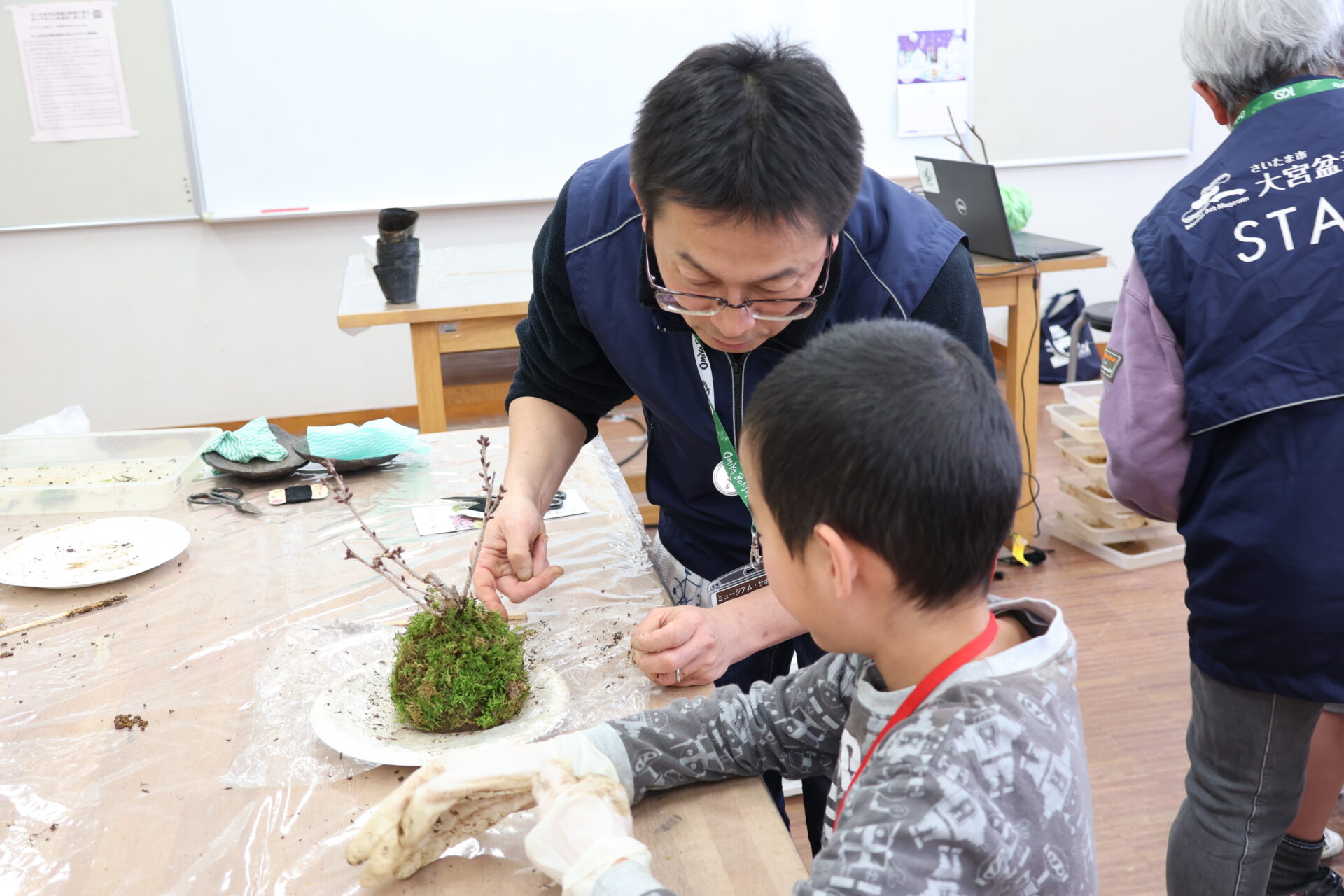
We also hold workshops for kids! (At Okubo Higashi Community Center; tree: Gotemba cherry)
Back number
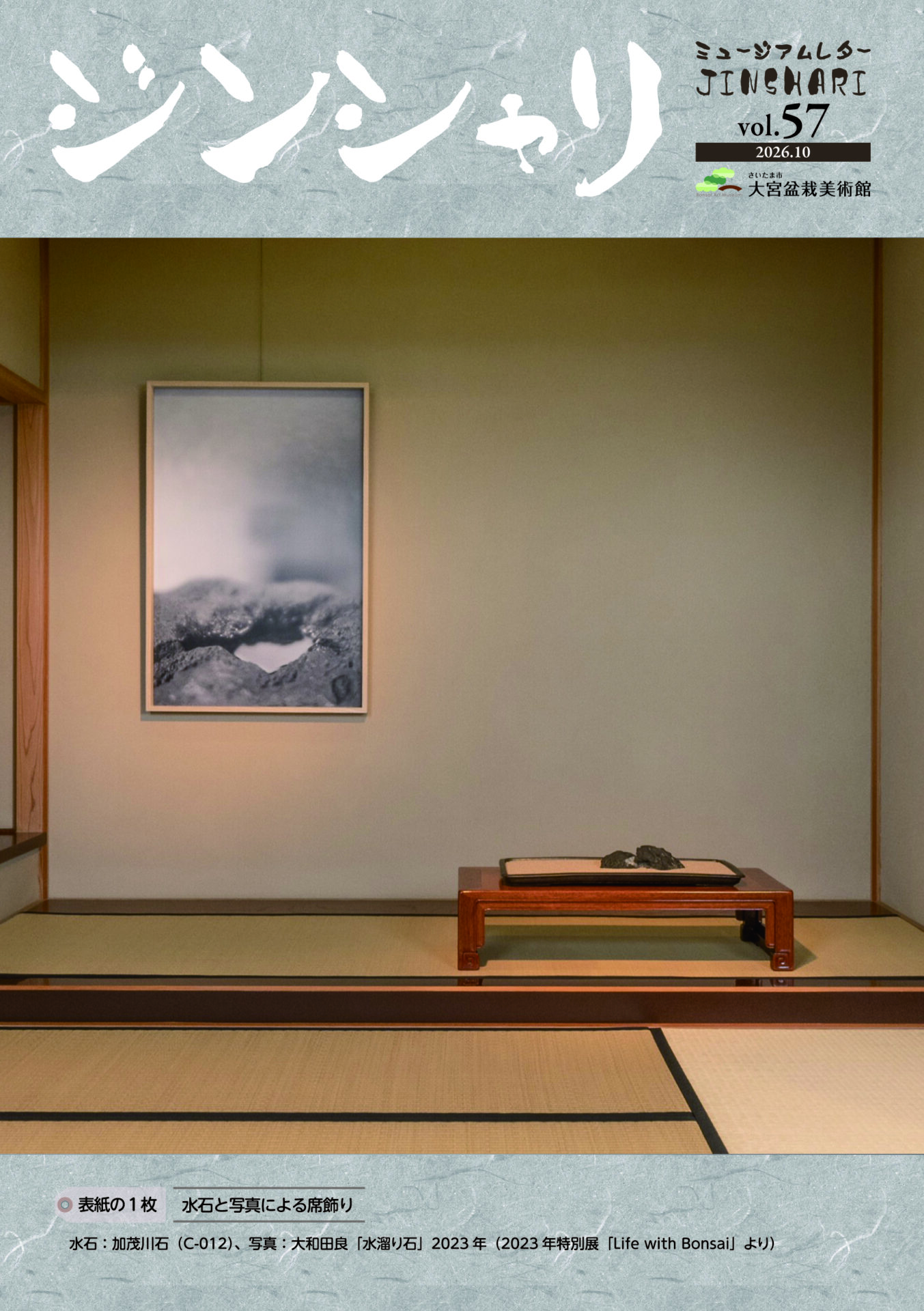
ジンシャリ Vol.57
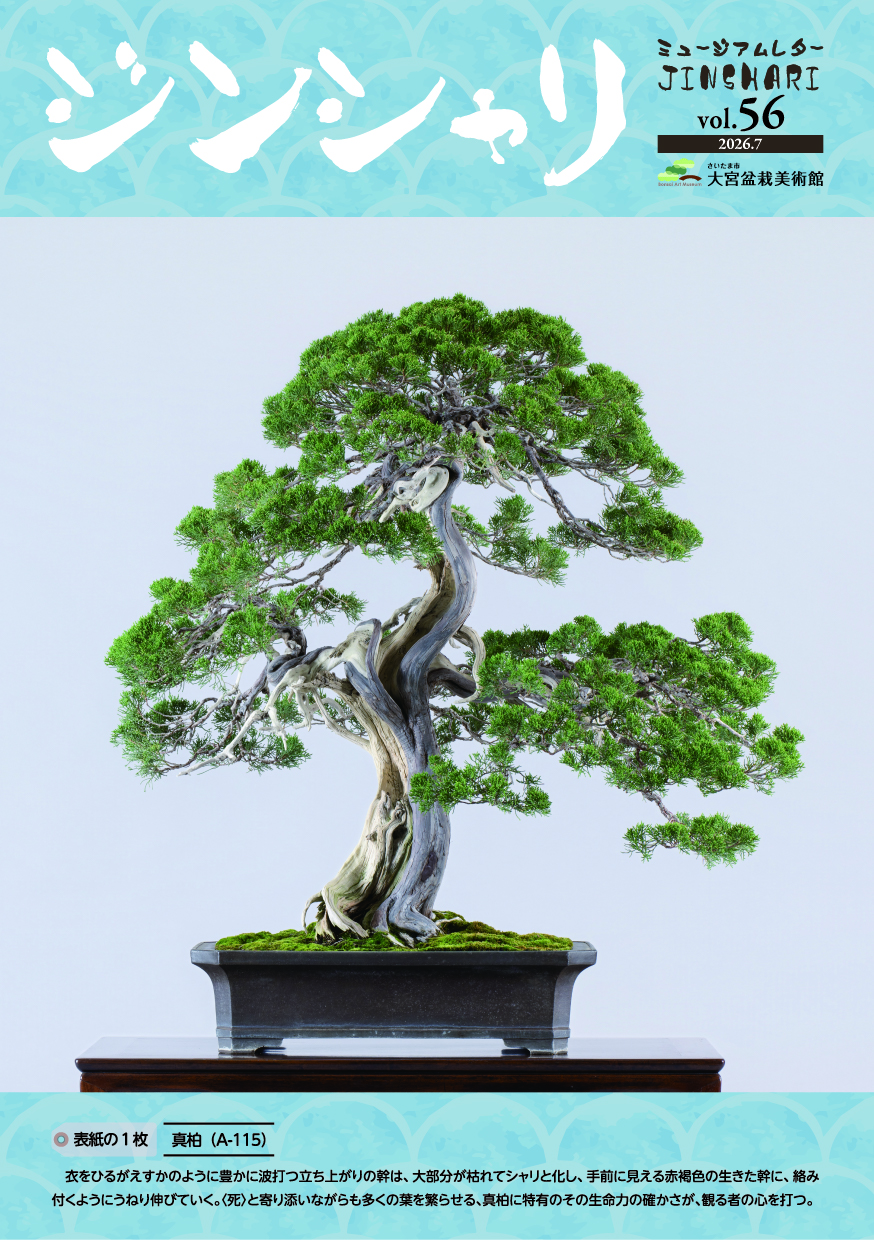
Jinshari Vol. 56
Jinshari Vol. 55
Jinshari Vol. 54
Jinshari Vol. 53
