




Jinshari Vol. 56
-
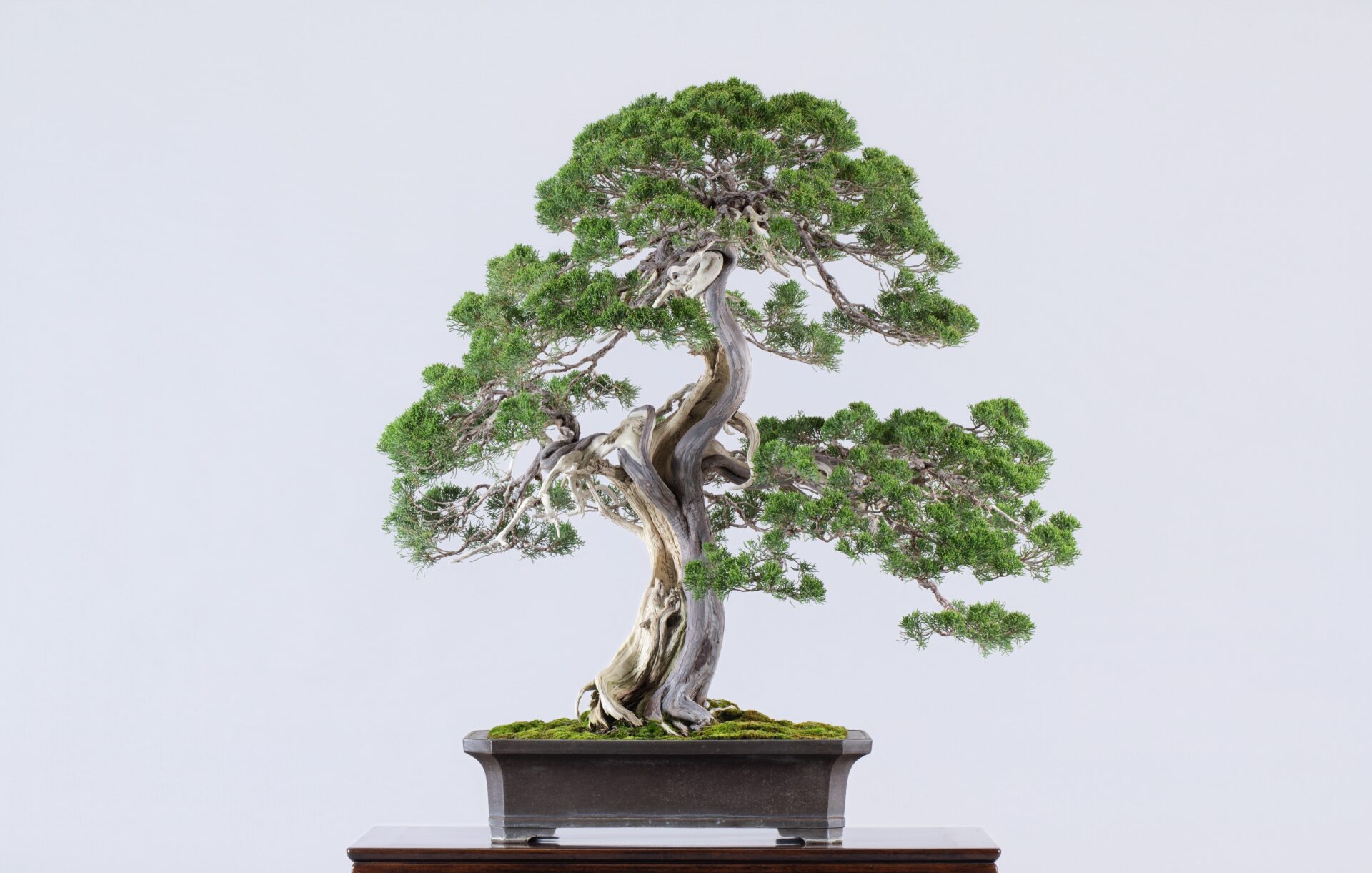
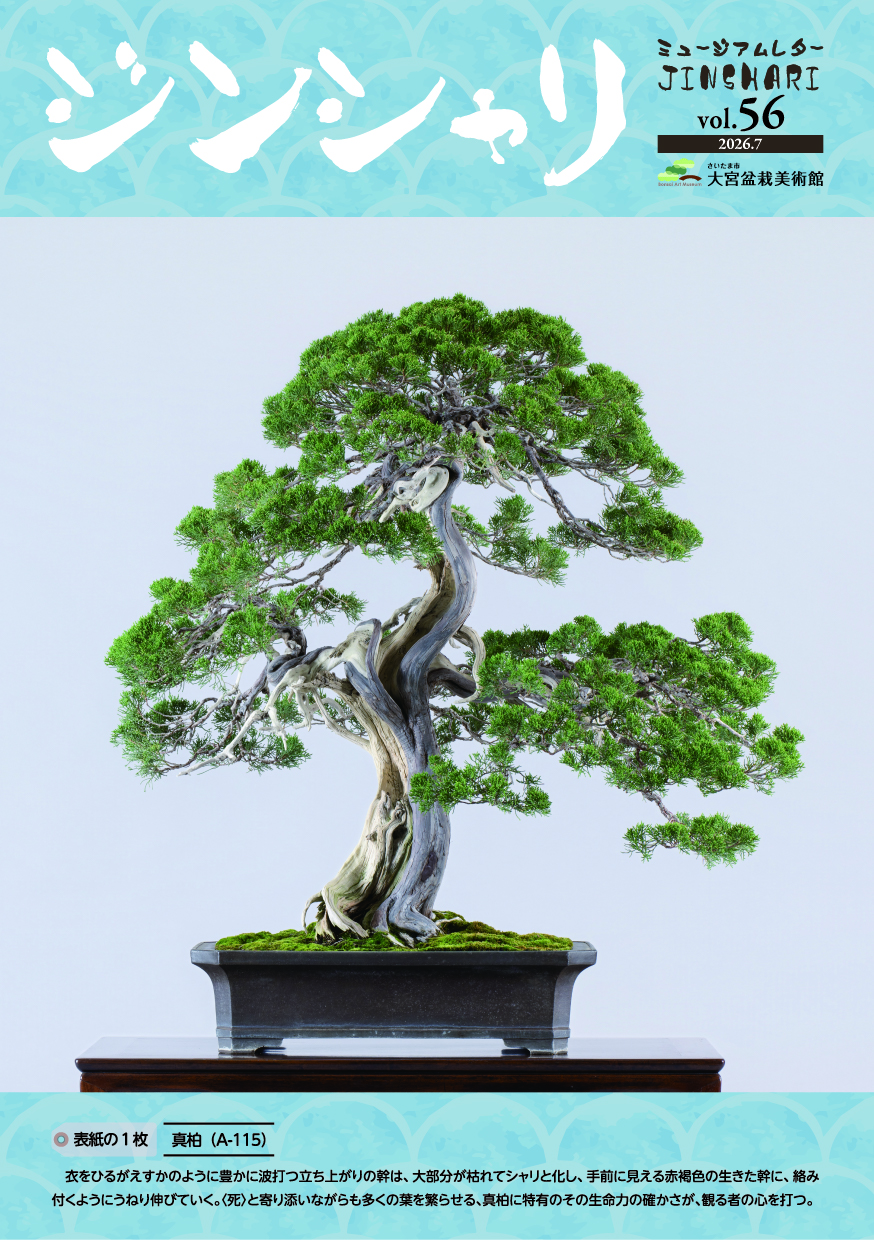
Front page: Japanese Juniper (A-115)
The trunk rises in rich, sweeping waves, as if it were a garment billowing in the wind. Most of it has died and turned to shari, yet from its front a reddish‑brown vein of living wood twists upward, clinging and winding around the deadwood as it grows. It is this unmistakable vitality—characteristic of the Japanese juniper—thriving with abundant foliage even while embracing death at its side, that deeply moves all who behold it.
Behind the Exhibits
The Origins of Bonseki: Landscaping & Wargaming
From September 4-16, for two weeks, we will be holding our regular bonseki exhibition in collaboration with Hosokawa-ryu Bonseki Foundation. Here we will share two interesting facts about the origins and usage of bonseki that we learned from those at the Hosokawa-ryu Bonseki Foundation.
1. Bonseki was used as a 3D model for garden planning!
Bonseki is said to have been established during the Muromachi period under the 8th Ashikaga shogun, Yoshimasa. Yoshimasa was known as a person of culture who started the Higashiyama culture and also focused efforts in constructing landscape gardens. It is said that bonseki techniques were used when designing these kinds of gardens.
Both gardens and bonseki are representations of landscape views. Bonseki, being a miniature 3D landscape, is a very suitable tool when considering different structural elements (hills, trees, ponds, streams, etc.) for a garden. Additionally, being able to draw up and easily erase plans is perfect for the different steps in planning.
2. Bonseki was used as a 3D model for wargaming!
Wargaming refers to the war council where plan military operations are planned in preparation for war. Set against a backdrop of mountainous areas and meadows interspersed with rivers, bonseki can be used for deciding where to deploy troops, almost resembling a diorama. This usage makes full use of its three-dimensional, miniature landscape expression and its ability to adapt to change.
Additionally, within old bonseki teachings, it is said that there is an aspect to bonseki related to practicing battle progression and wins, as well as holding ritualistic celebrations of land gains before they even happened. In farming customs, there were traditions of conducting a mock-harvest in spring as a form of “advanced celebration” to hope for and except a bountiful harvest later in the year. This similar way of thinking is seen in the bonseki wargaming practice.
It is precisely because bonseki possesses characteristics, features, and techniques not found in painting and drawing that it has taken root in history and has been utilized within various contexts. Since the Meiji era, it has been refined as an art form for expressing landscape scenes, a tradition that continues to this day. At this exhibition, held in early autumn, we hope you will take a moment to reflect on the functions and techniques cultivated throughout history as you view each piece.
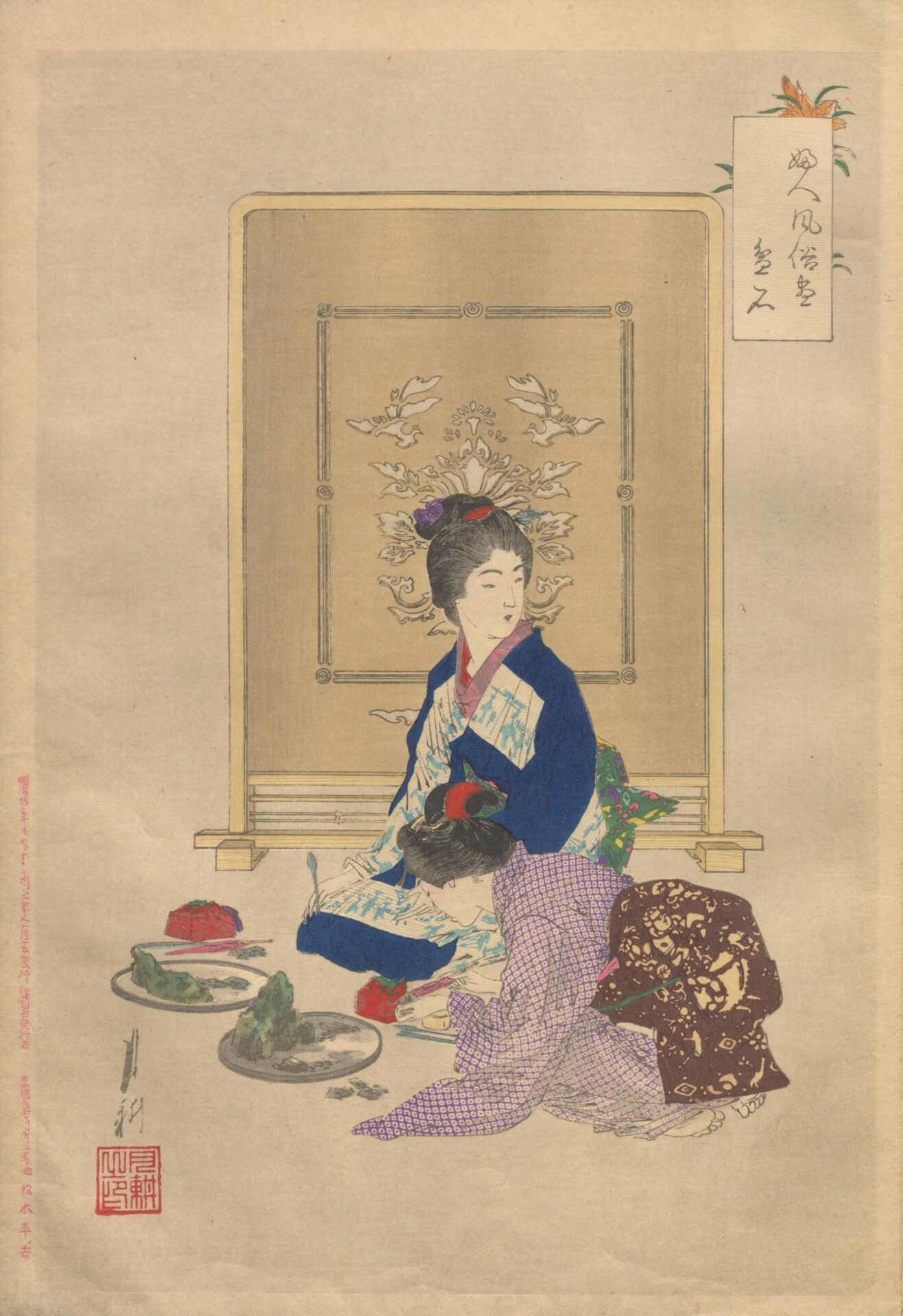
Fujin Fuzoku Tsukushi Bonseki by Ogata Gekkō (1898) National Diet Library Digital Collection
An Artisan’s Work
First Repotting in 15 Years: Japanese White Pine named Chiyo-no-matsu (A-100)
Chiyo-no-matsu, a Japanese white pine that exceeds over 1.6 meters in height and 1.8 meters in width, is the largest bonsai in our collection. This tree, which grabs your attention with one look even within the garden, had its first repotting in 15 years.
Chiyo-no-matsu has not been repotted since 2011, the year after the museum opened. Preparations for repotting had been underway since last spring by checking the work logs of now-retired bonsai technicians from the time.
Chiyo-no-matsu is so large that it cannot be removed from its pot by hand. So, for this repotting, scaffolding supports were used to surround the pot on all four sides, making a square-shaped frame. The tree was then lifted up using two chains so that the tree itself would not spin around. Scythes were used between the pot and root ball to dig a gap of about 5 cm around the rim. The tree was prepared to be removed from the pot by cutting and removing the roots from the side of the pot as well. Using a machine called a lever block, the large Chiyo-no-matsu was lifted up. Because many fine roots had been firmly wrapped around the bottom of the pot, some were torn, but other than that, Chiyo-no-matsu came out very cleanly. There was a lot of pumice stone within the root ball, making its breathability very good. There were also plenty of symbiotic fungi that help the growth of the tree. Despite 15 years passing since the previous repotting, there were no thick roots; the tree was in perfect condition with lots of thin roots. The moss was removed from the top and the upper roots were unraveled to improve drainage. Long roots were cut, and side roots were lightly trimmed back.
For the repotting soil, water drainage and breathability is very important, so a mix of hyuga soil, kiryu sand, and akadama was used. At the bottom of the pot, a layer of hard, coarse potting soil was spread and a mound was created so that the soil would reach inside the indented root ball; the tree was then carefully placed on it. Once the placement of the tree was decided, soil was pushed into the gaps using a long, handmade bamboo chopstick. The work was completed after giving Chiyo-no-matsu plenty of water.
The amount of soil used was approximately 8 bags of 14-liter (approx. 10 kg) soil. Currently, moss has been placed again on only part of the front so that it is easy to see the dryness of the soil. When you visit the museum, take a moment to crouch down and peek at the base of the tree to see the soil that was used.
Date repotted: April 9, 2026 (Thur)
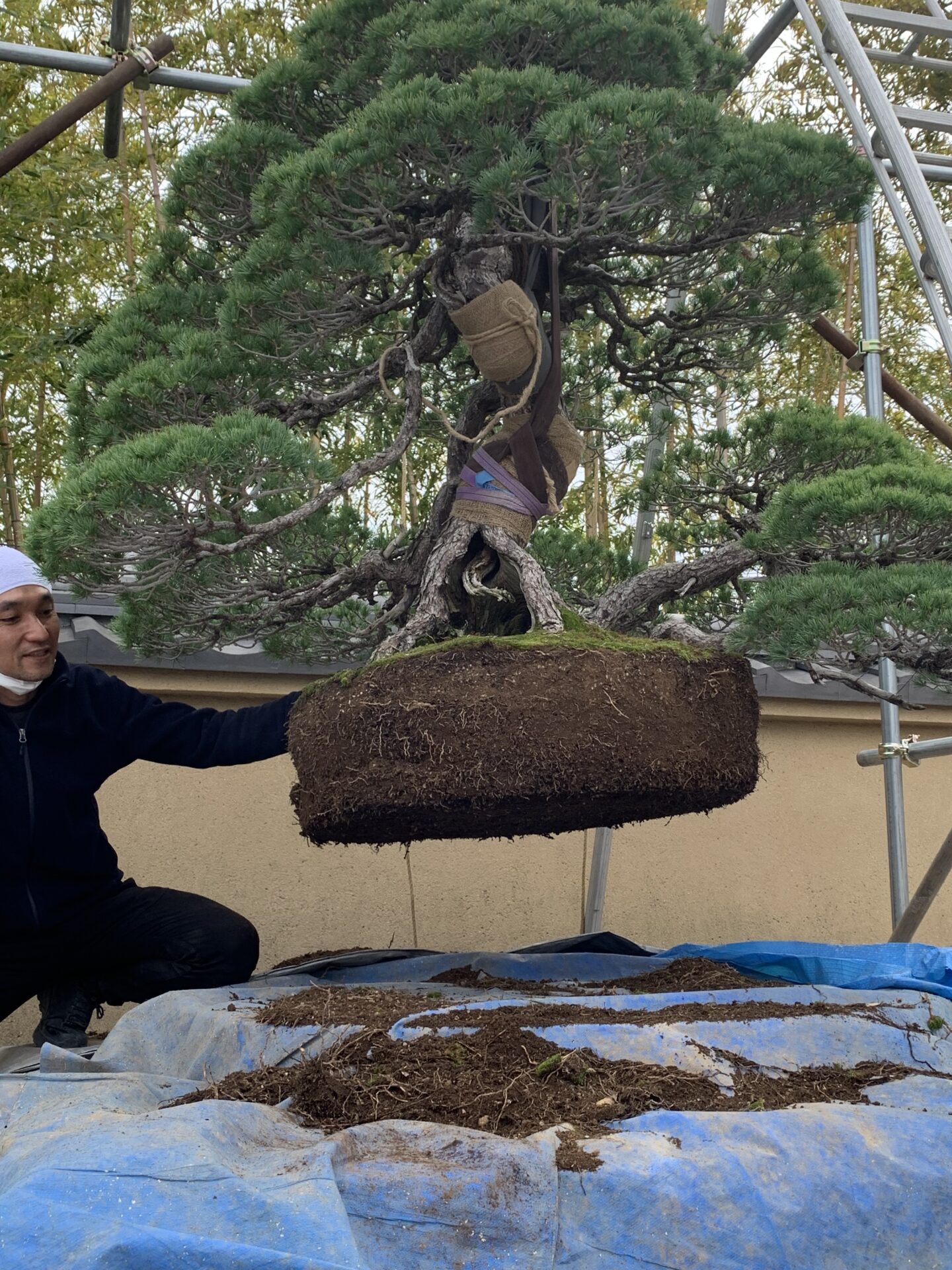
Chiyo-no-matsu being lifted up.
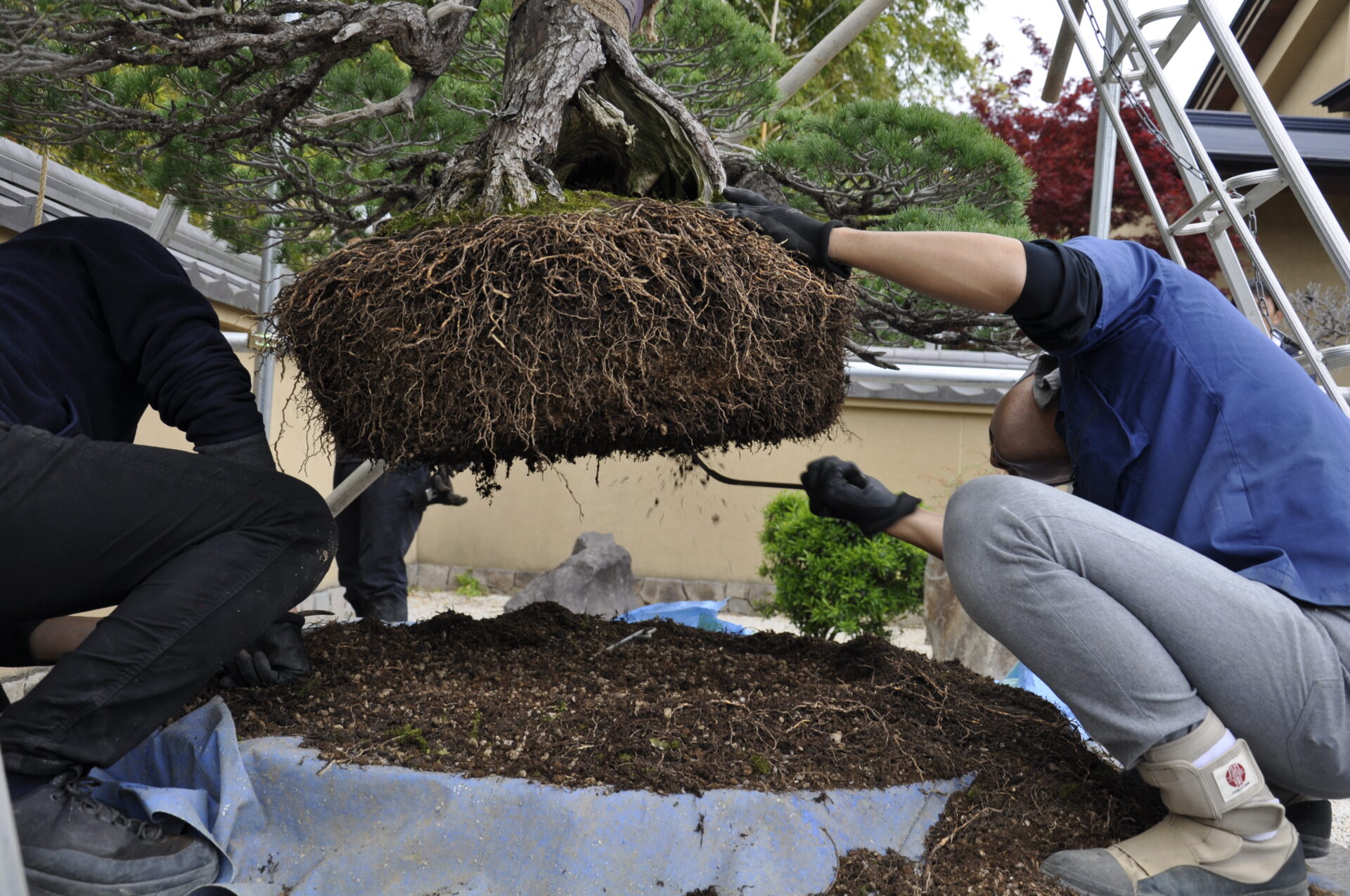
Breaking up the root ball and removing old soil.
The Supporter Reporter
―Bonsai Fans Across the World―Welcome Museum! Activities
The “Museum Supporters” volunteer group was formed at the Omiya Bonsai Art Museum to help with the museum’s various operations and activities. For this issue’s Supporter Reporter, we will introduce the activities Museum Supporters participate in.
With the start of the new fiscal year, 33 supporters have started their volunteer work. Supporters serve as assistants to various activities such as helping with elementary students visiting the museum and as workshop teachers. We also do tours for groups visiting and organize museum materials. Among these activities is Welcome Museum!, where we have the opportunity to share the awesomeness of bonsai directly with a variety of different guests.
Specifically, every Saturday, Sunday, and Monday we hold on-demand tours in the museum gallery and garden for guests from all over Japan and the world. There are also supporters who do the tours in foreign languages. From knowledgeable bonsai aficionados to children interested in bonsai, the types of questions I get asked can vary, so I try my best to communicate carefully with everyone. I conduct the tours in Japanese, English, and French. One rainy day, a Belgian woman got lost and when she finally made it to the museum, she was overjoyed to learn that someone spoke French, saying “I didn’t think there would be anyone that could speak my language!” There was also a man who came that was from America and had visited previously and fallen in love with bonsai. Hearing something like “I enjoy looking at bonsai more now. I want to come again!” is the greatest compliment I can receive.
Museum Supporter Yukari Shinozaki
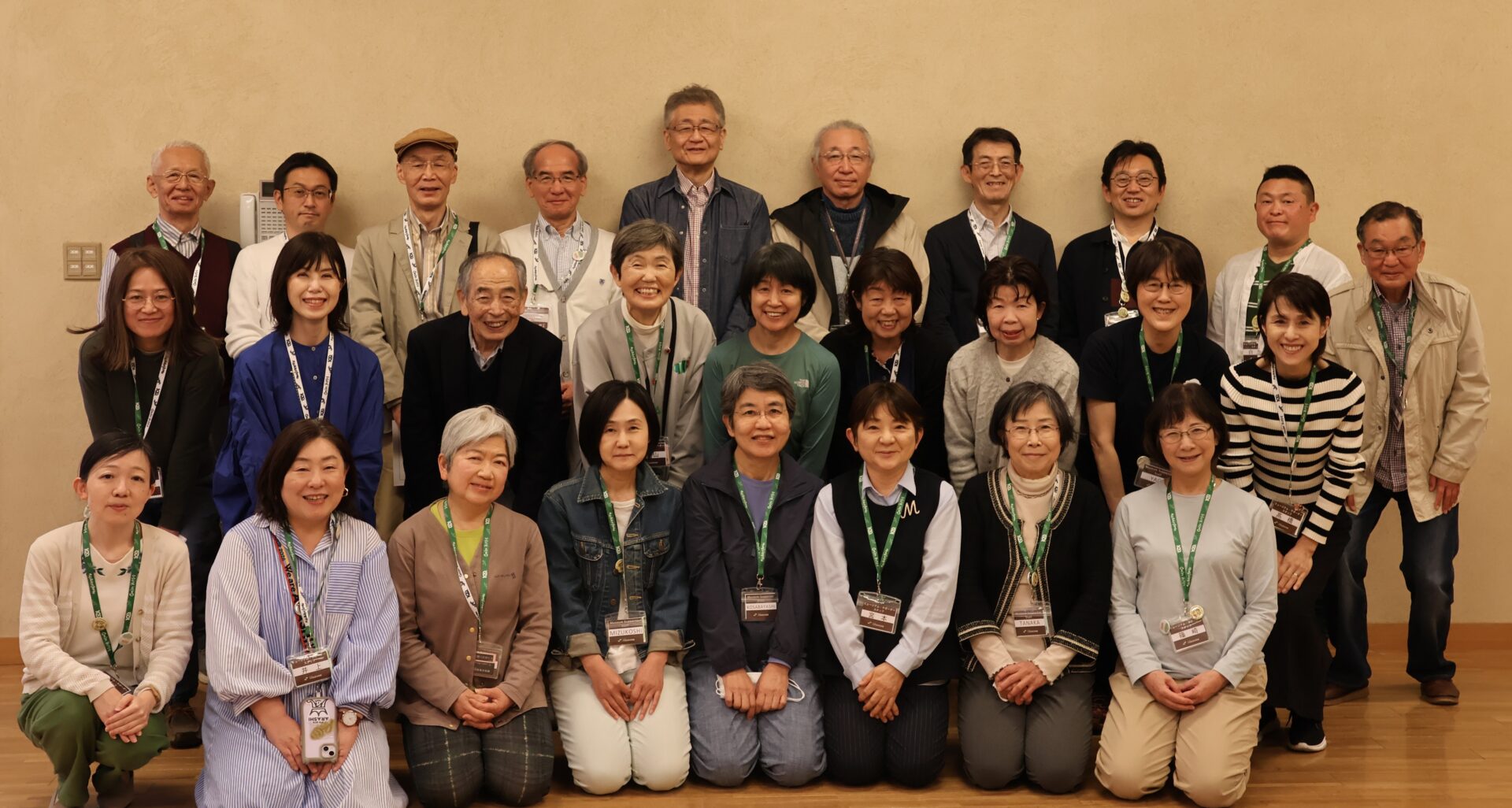
2026 Museum Supporter Guidance Meeting
Back number
Jinshari Vol. 56
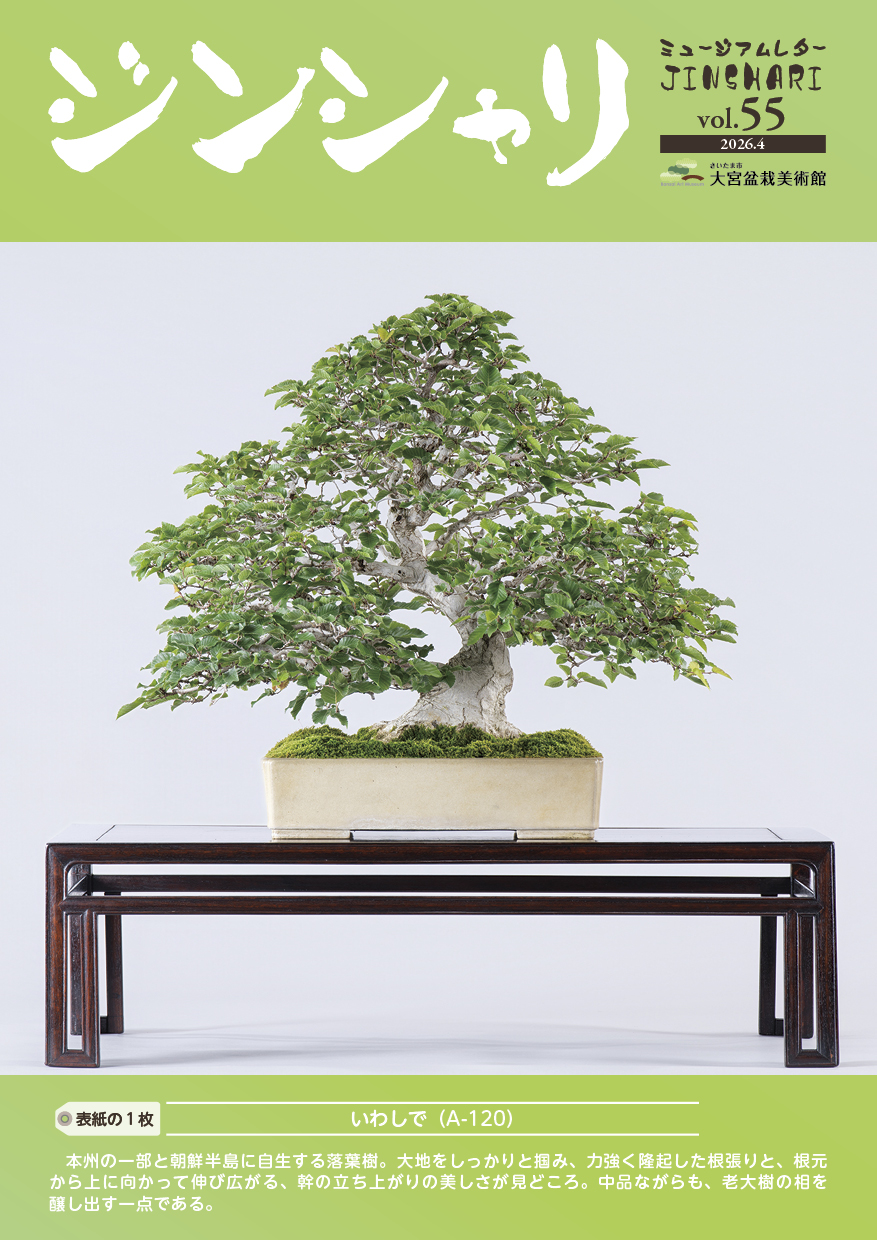
Jinshari Vol. 55
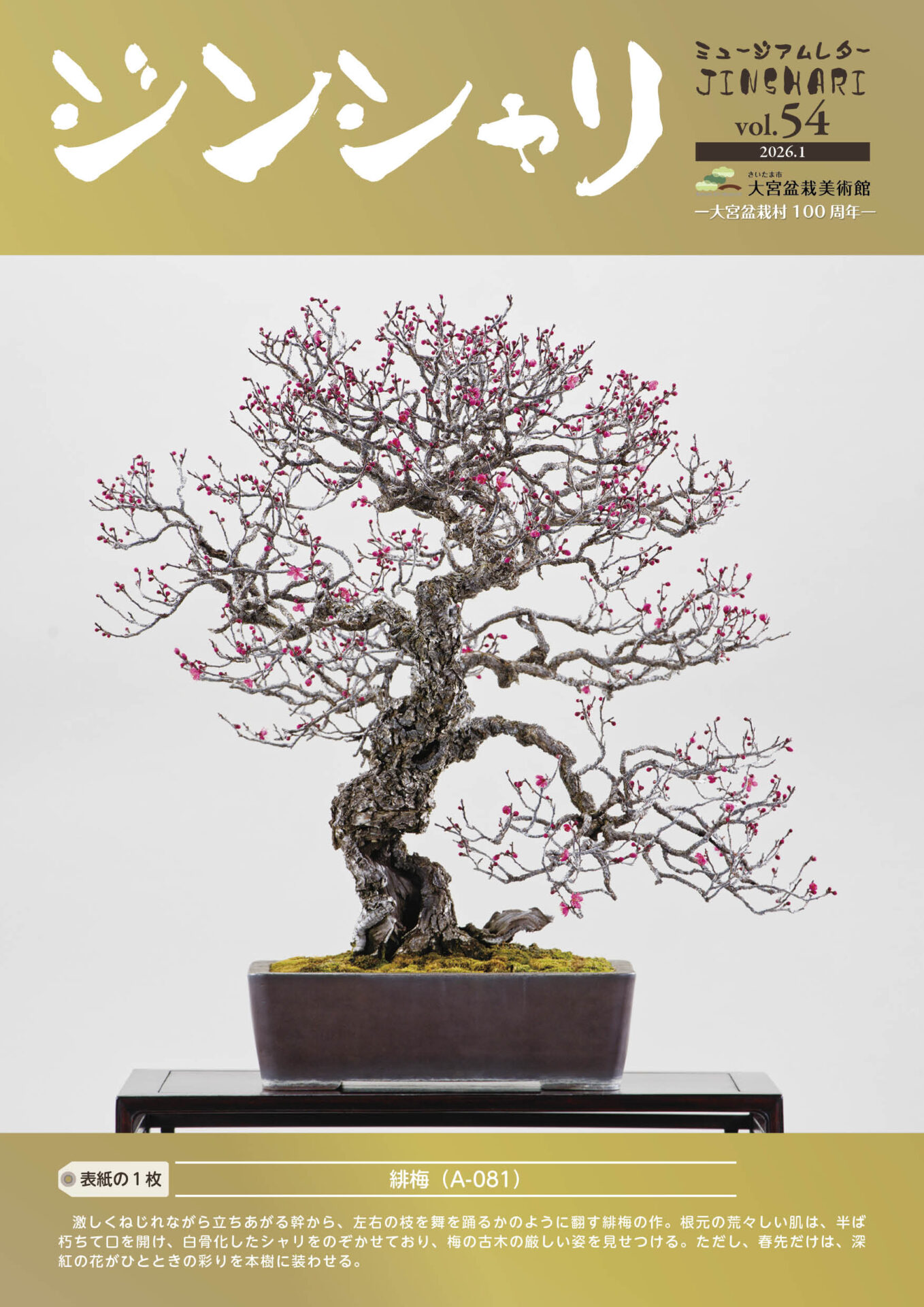
Jinshari Vol. 54
Jinshari Vol. 53
Jinshari Vol. 52
